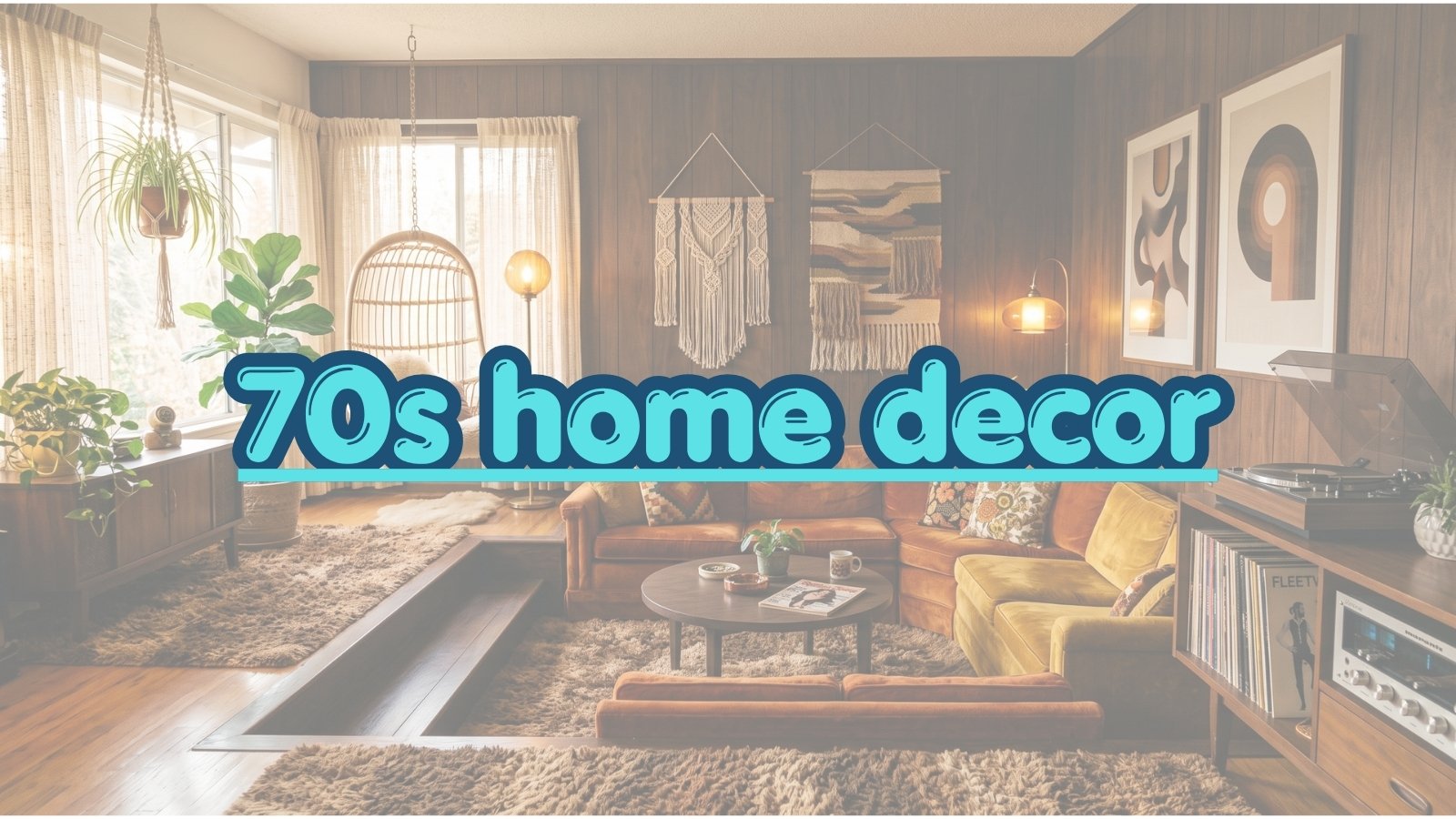
’70s home decor is officially back. After a decade of gray, minimalist interiors, 2026’s biggest residential design shift is warmth: mustard walls, curved sofas, rattan headboards, and stained glass lamps that would look right at home in 1976. Designers at Homes & Gardens and Livingetc both point to the same shift — nostalgia-driven decorating that trades sharp edges and cool gray tones for texture, curves, and color.
The good news: you don’t need to gut your house to get the look. This guide breaks down the specific 70s home decor trends worth adopting in 2026, room-by-room ideas for pulling them off, and the mistakes that make retro style look more costume than curated.
Key Takeaways
- Earth tones — mustard, avocado green, burnt orange, and rust — are replacing the gray palettes that dominated the last decade of interior design.
- Curved furniture, rattan, and cane are the lowest-risk ways to add authentic 70s character to a modern room.
- Stained glass accents and bold botanical or geometric prints add personality but work best in small doses, not full rooms.
- Designers warn that busy geometric wallpaper can read as dated fast in small, low-light spaces — use it as an accent, not a full wrap.
What Defines 70s Home Decor?
70s home decor centers on warmth and organic shape rather than the polished, monochrome look that dominated the 2010s and early 2020s. Think earthy color palettes, natural materials like rattan and cane, curved silhouettes, and pattern used with intention instead of restraint. Hunker’s roundup of 2026 retro design trends notes that the current revival is less about literally recreating a 1970s living room and more about borrowing its warmth and personality for a modern layout.
6 70s Home Decor Trends Worth Stealing in 2026
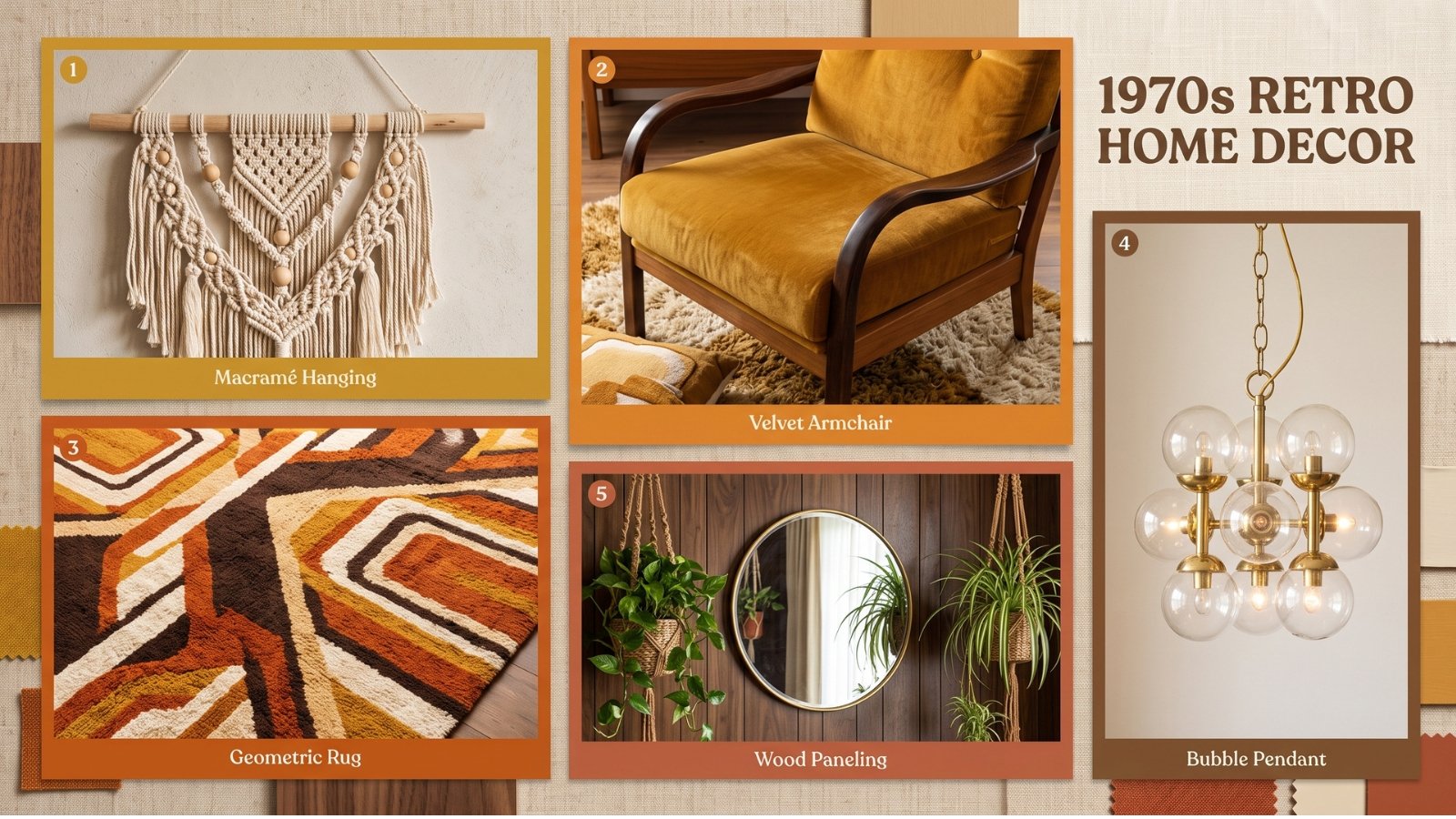
- Earth-tone walls and textiles. Mustard, avocado green, burnt orange, and rust are replacing the gray palettes of the last decade on walls, sofas, and rugs. If you’re not ready to commit a whole room, start with one accent wall or a set of throw pillows.
- Curved, rounded furniture. Curvy sofas and rounded armchairs are replacing sharp-edged furniture, echoing the soft silhouettes popular in the ’60s and ’70s. A single curved accent chair can shift a room’s whole feel without a full furniture overhaul.
- Rattan and cane. Rattan was a staple of 70s interiors because it’s practical, sustainable, and relaxed — qualities that still sell today. Look for a cane headboard, a rattan pendant light, or a single woven accent chair.
- Stained glass accents. Tiffany-style stained glass lamps are finding new life alongside stained glass window inserts and wall art. One statement lamp does more work than a whole room full of them.
- Bold botanical and geometric prints. Large-scale florals, Audubon-style botanical prints, and geometric patterns are back on wallpaper, bedding, and upholstery. Keep pattern to one surface — a headboard wall or a single upholstered piece — so the room doesn’t compete with itself.
- Vintage-inspired bedding. Groovy printed sheets and oversized throw pillows reminiscent of 70s bedrooms are showing up again in 2026 collections — an easy, low-cost entry point into the trend.
Room-by-Room 70s Decor Ideas
Living room: Anchor the space with a curved sofa or a pair of rounded accent chairs in a neutral base, then layer in a rattan coffee table, a stained glass lamp, and one boldly patterned throw pillow or rug. Keep walls in a warm neutral if you’re not ready to paint them mustard or avocado green.
Bedroom: Swap in vintage-inspired printed bedding, add a cane or rattan headboard, and hang one piece of stained glass or botanical art above the dresser. This is the easiest room to test the trend before committing elsewhere in the house.
Kitchen and dining: A burnt-orange or mustard accent wall, rattan pendant lighting over the table, and a few Audubon-style prints in the dining nook bring 70s warmth without touching cabinetry or appliances.
70s Decor Mistakes to Avoid
Not every 70s trend translates cleanly to a 2026 room. Some design experts caution that busy geometric wallpaper can read as dated and overwhelming fast, particularly in small spaces without much natural light. A few other pitfalls to watch for:
- Wallpapering an entire small room in bold pattern. Use it on one wall, a nook, or a powder room instead of a full space.
- Mixing too many patterns without a neutral base. Pick one dominant print and let solid earth tones do the rest of the work.
- Treating it as one-note nostalgia. The trend works best blended with pieces you already own, not as a themed room built from scratch.
Frequently Asked Questions
Is 70s home decor actually trending in 2026?
Yes. Multiple design outlets, including Homes & Gardens, Hunker, and Livingetc, independently identify earth tones, curved furniture, rattan, and stained glass as leading 2026 interior trends rooted in 1970s style.
What colors define 70s home decor?
Mustard yellow, avocado green, burnt orange, rust, and warm cream are the core palette. These earth tones are replacing the cooler grays and whites that dominated interior design over the past decade.
How do I add 70s style without it looking outdated?
Anchor the room in neutral furniture “bones,” then add one or two statement pieces — a curved chair, a stained glass lamp, a rattan headboard — instead of committing an entire room to the look at once.
The Bottom Line
70s home decor works in 2026 because it’s warm, textured, and forgiving — the opposite of the sterile-minimalist look many homes have leaned on for the past decade. Start small: an earth-tone accent wall, a rattan light fixture, or one curved chair. Layer in more — stained glass, bold prints, vintage bedding — once you know how much retro warmth your space can hold.