
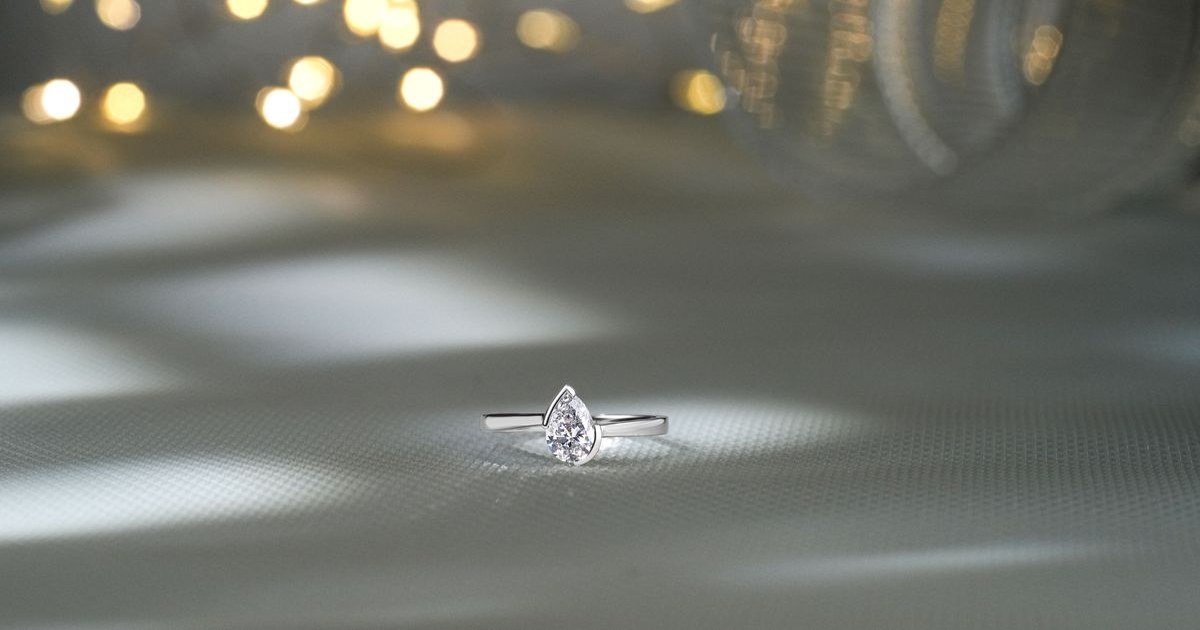
Search “art deco engagement rings” and you’ll get two very different kinds of results in the same page: $30 gold-plated statement rings and $30,000 antique platinum-and-diamond originals. Both are honestly labeled “art deco” — the term describes a design style, not a price tier or an era of manufacture. That’s the part most buying guides skip, and it’s the part that actually changes what you should look for.
This guide covers what makes a ring art deco (versus just “vintage-looking”), the stones and metals that show up most often in the style, what a realistic budget looks like at each tier, and sizing and care specifics for the pieces you’ll actually find for sale today — including a budget-friendly gold-plated onyx pick if you want the look without an heirloom price tag.
✦ Key Takeaways
- ✦“Art deco” describes a design style — geometric symmetry, strong contrast, step-cuts and sunburst motifs — not an antique or a specific price point. Reproductions are honestly labeled art deco too.
- ✦The average U.S. engagement ring spend was $4,600 in 2025, down from $5,200 in 2024, and 64% of couples spent under $6,000 (The Knot 2025 Real Weddings Study, via Rapaport).
- ✦61% of 2025 engagement rings used a lab-grown center stone — a 239% increase since 2020 (The Knot 2025 Real Weddings Study, via Rapaport).
- ✦Black onyx rates 6.5-7 on the Mohs hardness scale, durable enough for daily wear but scratchable by quartz, topaz, and sapphire (International Gem Society).
- ✦Pinterest’s 2026 Trend Report names “Neo Deco” as a top trend for the year, with heirloom-jewelry searches up 45% year-over-year (Pinterest Predicts 2026, via National Jeweler).
What Actually Makes a Ring “Art Deco”?
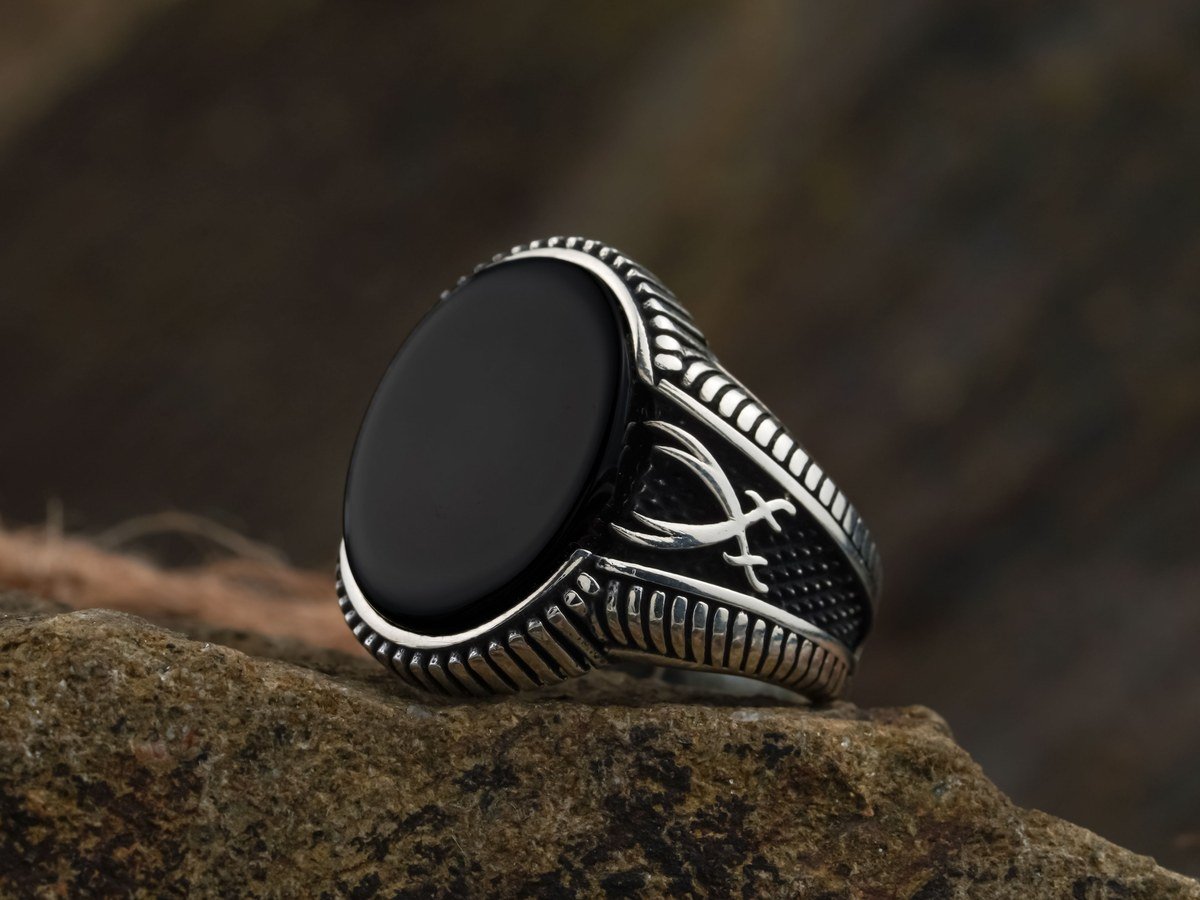
Art deco is a design movement that peaked roughly between 1920 and 1935, and the jewelry from it has a recognizable visual language: strict geometric symmetry, strong light-and-dark contrast (often black onyx or sapphire against white gold or platinum), step-cuts and baguettes instead of rounded shapes, and sunburst or fan motifs radiating out from a center stone. Filigree metalwork — fine, lace-like patterns cut or soldered into the band — and milgrain edging (a row of tiny beaded detail along a metal edge) show up constantly, because both techniques let jewelers create intricate geometric patterns without adding bulk.
None of that requires the ring to be 100 years old. A ring made this year with an oval or emerald-cut stone set against a contrasting color, clean geometric lines, and deliberate symmetry is art deco in style, the same way a new building can be “art deco” in style without being from 1928. What separates an honest reproduction from a misleading listing is simply whether the seller calls it “antique” or “original” when it isn’t — a straightforward “art deco style” or “art deco inspired” label, on the other hand, is accurate regardless of manufacture date.
Art Deco vs. Vintage vs. Antique: Clearing Up the Confusion
These three words get used almost interchangeably in ring listings, and they mean different things:
- Art deco is a style — geometric, high-contrast, defined by the design elements above. A ring can be art deco style whether it was made in 1925 or last week.
- Vintage is an age claim, generally meaning at least 20-30 years old, without specifying a particular design era. A vintage ring could be art deco, mid-century, retro, or any other older style.
- Antique is a stricter age claim, generally meaning 100+ years old. A genuine antique art deco ring made in, say, 1928 would legitimately carry all three labels at once.
The practical upshot: if a listing says “art deco style” or “art deco inspired,” you’re buying a design aesthetic, not a claim about age. If you specifically want a period-correct original — with the wear patterns, hand-fabrication quirks, and provenance questions that come with genuine antique jewelry — look for listings that explicitly say “antique” or give an estimated decade, and budget accordingly; those pieces sit in a different price category entirely from new reproductions.
Popular Art Deco Stones, Cuts & Metals
A handful of choices show up again and again in both original and reproduction art deco jewelry, because they’re what the geometric aesthetic is built around.
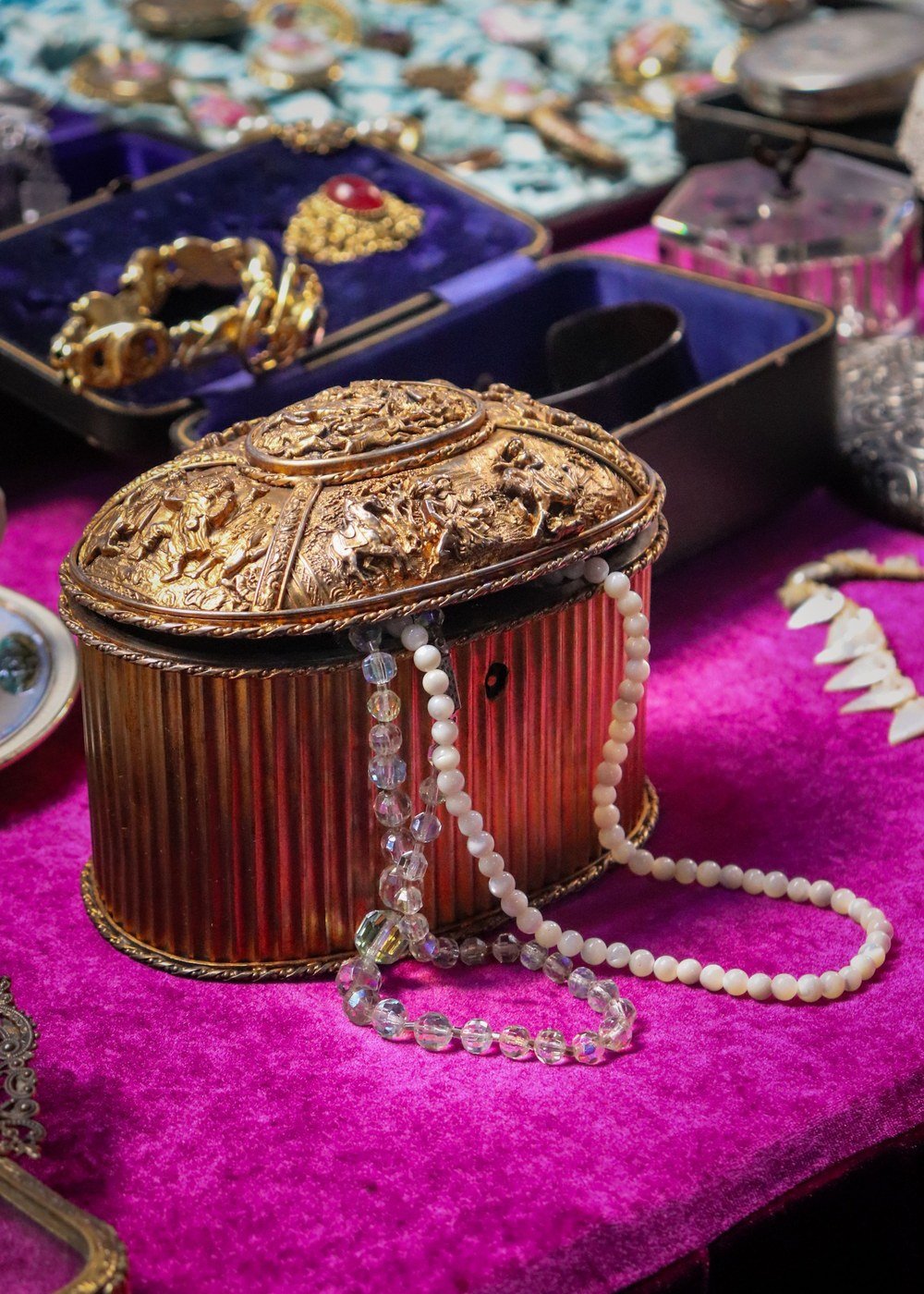
Stones. Oval and emerald (step) cuts dominate because their clean geometric outlines suit the style better than a rounded brilliant cut. Black onyx and sapphire are the classic contrast stones, set against white metal or gold to create the high-contrast look the era is known for; diamonds — natural or lab-grown — fill the same role in more traditional pieces.
Onyx durability. Black onyx (technically a form of chalcedony, a quartz-family mineral) rates 6.5 to 7 on the Mohs hardness scale. That’s hard enough for everyday wear, well above the 2.5-3 rating of a pearl or opal. It can still be scratched by harder materials in the same drawer or jewelry box, though, including quartz itself, topaz, and sapphire. Store it separately from those harder stones rather than tossed loose in a bag.
Metal terminology that actually matters. “Gold plated,” “vermeil,” and “solid gold” aren’t marketing synonyms — they’re legally defined categories. Under FTC guidelines, “Gold Plate” or “Gold Electroplate” requires a minimum of 0.175 microns of 10-karat-or-finer gold electrolytically bonded to a base metal (16 CFR §23.3(c)(3)). “Vermeil” is a specific step up: sterling silver as the base, plated with at least 2.5 microns of 10k+ gold — more than 14 times the minimum plating thickness of standard gold plate (16 CFR §23.4). Neither is “fake gold” in a deceptive sense. But the plating will wear thinner over years of daily contact than solid gold or vermeil will, and that’s worth knowing before you decide what to spend.
Center Stone Choice in 2025 Engagement Rings. donut data: Lab-grown diamond 61; Natural diamond 39.Source: The Knot 2025 Real Weddings Study, via Rapaport Feb 2026.
Center Stone Choice in 2025 Engagement Rings
A 239% increase in lab-grown adoption since 2020
100
total
Lab-grown diamond 61
Natural diamond 39
Source: The Knot 2025 Real Weddings Study, via Rapaport (Feb 2026)
Is Art Deco Actually Trending in 2026?
Yes, and it’s not just a jewelry-industry talking point. Pinterest’s 2026 Trend Report names “Neo Deco” — an art deco revival — as one of its named trends for the year, and searches for “heirloom jewelry” on the platform rose 45% year-over-year in the report’s tracking window (Pinterest Predicts 2026, via National Jeweler). That lines up with a broader nostalgia-driven shift toward vintage-inspired accessories rather than a narrow, single-style fad.
It also lines up with the lab-grown diamond shift shown above: reproduction art deco settings pair naturally with lab-grown center stones, since both let shoppers get a bigger, more dramatic-looking stone in an elaborate geometric setting for meaningfully less than an equivalent natural-diamond piece would cost — which matters directly to the budget math in the next section.
Our Pick for an Accessible Art Deco Ring
✦ Our Pick For Budget Shoppers · Affiliate Link
FAMIVES Vintage Black Onyx Art Deco Ring
An oval-cut black onyx stone set in a gold-plated vintage-inspired band — the classic art deco contrast look at a fraction of the cost of a fine-jewelry original. Rated 4.4 out of 5 stars across 196 reviews, backed by a 30-day guarantee, and available in sizes 5 through 10.
Disclosure: that’s an affiliate link. If you buy through it, we may earn a small commission at no extra cost to you. See our full affiliate and third-party disclosure for details.
This is a gold-plated-base, onyx-center piece, not solid gold or a diamond — and it’s priced accordingly. It’s the right pick if you want to try the art deco look, need a budget-friendly promise ring or anniversary gift, or want an everyday-wearable statement piece without committing fine-jewelry money to it. If you want a piece meant to be worn daily for decades or handed down, see the mid-range and premium tiers below instead.
How to Choose an Art Deco Ring by Budget
Budget ($30-80): Gold-plated or silver-plated base metal with onyx, cubic zirconia, or lab-created stones. This tier is genuinely art-deco styled — geometric settings, contrast stones, filigree detailing — just built from less expensive materials. Expect the plating to show wear over a few years of daily contact; it’s the right call for testing the style or buying a secondary/everyday piece rather than a daily-wear-for-life ring.
Mid-range ($200-800): Vermeil or solid 10k/14k gold with genuine gemstones — sapphire, onyx, or a lab-grown diamond center stone. This is where independent jewelers on platforms like Etsy tend to sell new-made art deco reproductions, and it’s a realistic range for a couple who wants the look in durable, real-gold materials without natural-diamond pricing.
Premium/heirloom ($2,000+): Platinum or 18k gold with natural diamonds, hand-finished filigree, and milgrain edging — either a new fine-jewelry reproduction or a genuine antique original. This tier is where the 2025 average natural-diamond spend of $7,000 and up actually lands, and it’s the category to shop if you specifically want an authenticated antique piece with real provenance.
2025 Average Engagement Ring Spend by Stone Type (USD). lollipop data: Lab-grown center stone 4300; 2025 overall average 4600; Natural diamond center stone 7000.Source: The Knot 2025 Real Weddings Study, via Rapaport Feb 2026.
2025 Average Engagement Ring Spend by Stone Type (USD)
Overall average $4,600 – down from $5,200 in 2024
Lab-grown centerstone
4300
2025 overallaverage
4600
Natural diamondcenter stone
7000
Source: The Knot 2025 Real Weddings Study, via Rapaport (Feb 2026)
| Tier | Typical Cost | What You Get |
|---|---|---|
| Budget | $30-80 | Gold/silver-plated base, onyx or lab-created stones, art-deco-styled setting |
| Mid-range | $200-800 | Vermeil or solid 10k/14k gold, genuine gemstones, independent-jeweler reproductions |
| Premium/heirloom | $2,000+ | Platinum or 18k gold, natural diamonds, hand-finished filigree, or genuine antique |
For context, 33% of all 2025 engagement ring buyers spent under $3,000 total, and 64% spent under $6,000 — so the mid-range tier above is where the majority of shoppers, art-deco-style or otherwise, actually land (The Knot 2025 Real Weddings Study, via Rapaport).
Sizing and Care for Art Deco Rings
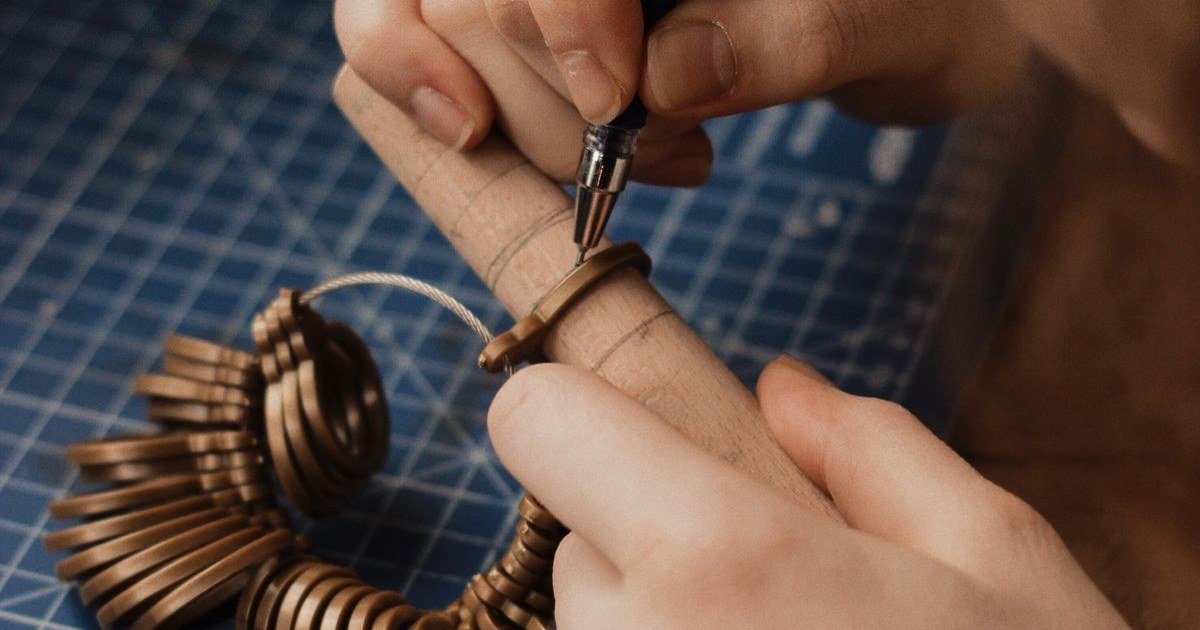
Ring sizing works the same regardless of style, but it’s worth getting right before you buy rather than after: a jeweler measures finger circumference with a graduated finger gauge, and most listings (including budget gold-plated pieces) offer a limited size range rather than the full adult sizing spectrum, so check the size chart against a known ring you already own before ordering.
Care basics that matter more on art deco settings specifically: the filigree and prong-work common to the style has more small crevices than a plain band, so soap residue and lotion build up faster — a soft brush and warm water every few weeks keeps the detail visible instead of dulled. For plated pieces, avoid submerging in pools, hot tubs, or cleaning products with chlorine, which accelerates plating wear; store the ring in a separate, soft-lined compartment away from harder stones (remember onyx’s 6.5-7 Mohs rating) so it doesn’t pick up scratches from contact with other jewelry in the same box.
Common Mistakes When Buying an Art Deco Engagement Ring
1. Assuming “art deco” means antique. As covered above, it’s a style, not an age claim. Read the listing carefully for words like “antique” or “original” versus “art deco style” or “inspired” before assuming you’re buying a period piece.
2. Buying plated jewelry expecting solid-gold durability. Gold plating is a thin surface layer by legal definition — it will wear over years of daily wear in a way solid gold or vermeil won’t. That’s a fair trade for the price difference, but it should be an informed one, not a surprise a year in.
3. Skipping the size check on a limited-run listing. Budget and independent-jeweler pieces often ship in a narrower size range than mall jewelry stores carry. Confirm your size against the specific listing’s chart, not a generic sizing assumption, before ordering.
4. Storing a delicate filigree setting loose with other jewelry. The fine metalwork that makes art deco pieces distinctive is also more prone to catching on other jewelry or picking up scratches from harder stones. A separate soft pouch or lined compartment is a five-second habit that meaningfully extends the piece’s life.
5. Ignoring the stone’s actual hardness. Not every “onyx-look” or “diamond-look” stone shares the real gem’s durability. Check the listed gem type specifically — genuine onyx’s 6.5-7 Mohs rating is a very different daily-wear proposition than a soft glass or resin substitute.
Frequently Asked Questions
Is a gold-plated art deco ring a “real” engagement ring?
Yes — plating describes the metal finish, not whether the ring is a legitimate engagement ring. It’s a durability and longevity tradeoff, not a legitimacy one: a gold-plated ring is honestly a gold-plated ring, not a fake ring, and plenty of couples choose one deliberately for the budget and the ability to upgrade later.
What’s the difference between art deco and Victorian or Edwardian rings?
They’re different design eras with different visual signatures. Victorian (roughly 1837-1901) and Edwardian (1901-1915) jewelry favors romantic, nature-inspired motifs and softer, more ornate curves; art deco (roughly 1920-1935) is defined by strict geometry, hard lines, and high-contrast color pairing — a deliberate reaction against the earlier eras’ ornamentation.
How durable is black onyx for an everyday ring?
Reasonably durable for daily wear at 6.5-7 on the Mohs hardness scale — well above a pearl or opal — but it can be scratched by harder materials like quartz, topaz, or sapphire, so store it separately from those stones rather than tossed loose with other jewelry.
Should I buy a genuine antique art deco ring instead of a reproduction?
Only if provenance and period-correct manufacture specifically matter to you, since genuine antiques carry a real premium and more variables (wear, prior repairs, stone treatments) to verify before buying. A well-made reproduction gets the same visual style, in your choice of size and metal purity, without those variables — most shoppers are better served by a reproduction unless the antique-specific appeal is the point.
Is the FAMIVES Vintage Black Onyx Ring a good starter art deco ring?
For the price point, yes — it delivers the core art deco signature (oval-cut contrast stone, geometric vintage-inspired setting) with a 4.4-star rating across 196 reviews and a 30-day guarantee, which covers the two things worth checking on any budget jewelry purchase: that other buyers are satisfied and that you have recourse if the size or quality isn’t right.
Conclusion
“Art deco” tells you about a ring’s geometry and contrast, not its age or its price — which means you can shop the style at every budget once you know what you’re actually looking for: step-cuts and ovals, strong color contrast, filigree and milgrain detailing, and (if it matters to you) an honest distinction between “art deco style” and a genuine antique. Start with a budget-friendly piece like our onyx pick above if you want to try the look, move to vermeil or solid gold with a genuine gemstone for a daily-wear piece built to last, and reserve platinum-and-natural-diamond originals for when an authenticated heirloom is specifically what you want.
Read our disclosure policy for how we select and link products, or see our About page for more on how we research these guides.