
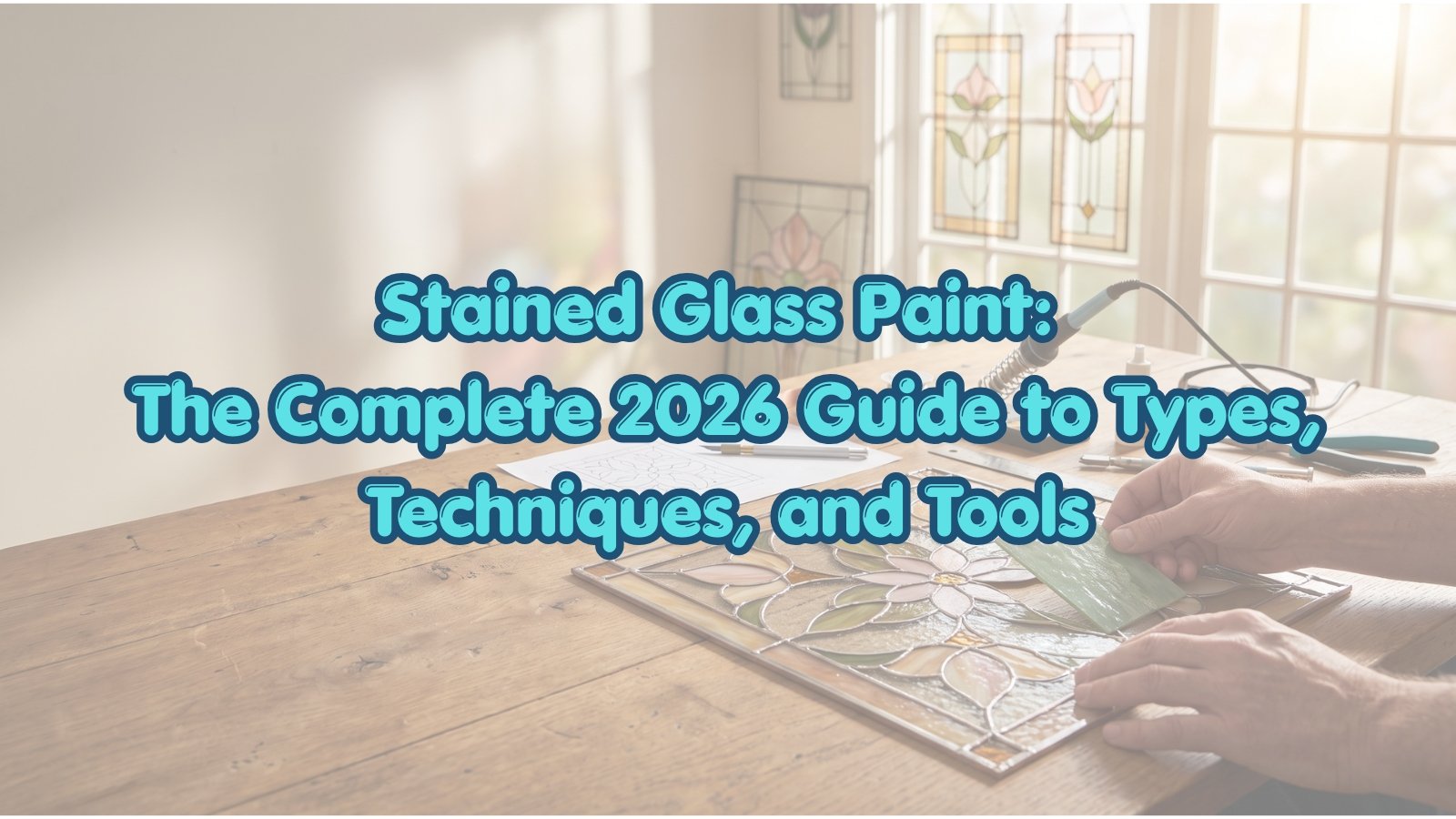
Walk into the glass-painting aisle of any craft store and you’ll find a wall of bottles all calling themselves “stained glass paint.” Jewel-toned window color, enamel sets, kiln paints, leading pens in three different metallics. They are not the same product, they don’t behave the same way once they’re on the glass, and grabbing the wrong one is the single most common reason a first faux stained glass project ends up looking like a finger painting instead of a window.
This guide sorts out what stained glass paint actually is, which of the three real types you want for your project, what it costs, and the technique — not just the paint — that separates “obviously homemade” from “wait, is that real?” If you haven’t read our breakdown of real stained glass vs. faux stained glass, this article is the deep dive into the paint side of that comparison.
Key Takeaways
- Stained glass paint isn’t one product — it’s three: vitreous (kiln-fired), heat-set enamel (oven-baked), and air-dry glass paint. Durability and cost climb with each step up.
- Air-dry paint (Gallery Glass, Pebeo Vitrail) is what most beginners actually buy — roughly $4–$13 a bottle, dry to the touch in about 24 hours, fully cured in about a week.
- Liquid leading, not the paint color, is what makes a piece read as “stained glass.” Skip it and you’ve made a tinted-glass panel, not a faux stained glass one.
- The paint is translucent by design, so a single coat almost always looks washed out. Plan on two.
- Taping a printable pattern under the glass turns freehand painting into paint-by-numbers — a much friendlier way to start.
What “Stained Glass Paint” Actually Means
“Stained glass paint” is an umbrella term, not a single product, and that’s exactly why the craft store aisle is confusing. It covers everything from a $6 bottle of water-based hobby paint to a professional-grade enamel that gets fired into the glass at over 1,000°F. What all of them have in common is the goal: mimic the look of real stained glass — individually cut, colored glass pieces joined with soldered lead or copper lines — using paint and outliner on a single sheet of plain glass instead. That’s the faux stained glass technique, and stained glass paint is the material that makes it work.
The 3 Types of Stained Glass Paint
Vitreous Paint (Kiln-Fired)
Vitreous paints are made from finely ground glass suspended in a painting medium. You apply it like any other paint, then fire the piece in a kiln at high temperature. The heat fuses the paint directly into the surface of the glass, so the color becomes part of the glass itself rather than a layer sitting on top of it. That’s what makes it permanent and scratch-proof — and also why it’s the least accessible option. You need a kiln, a firing schedule, and some patience for the learning curve. This is the route for people building heirloom pieces, not a Saturday afternoon project.
Heat-Set Enamel Paint
Heat-set enamels split the difference. You paint as usual, then bake the piece in a regular kitchen oven rather than a kiln. The baking creates a genuine chemical bond between the paint and the glass, which is why heat-set pieces hold up far better than air-dry ones — many manufacturers rate their cured enamel as top-rack dishwasher safe, though that claim varies by brand and is worth confirming on your specific bottle before you trust a piece to the dishwasher. This is the type most people reach for when they’re painting something they’ll actually use, like a drinking glass or a serving tray, rather than something that just hangs in a window.
Air-Dry Glass Paint
No kiln, no oven — air-dry paint cures at room temperature over a few days. Brands like Gallery Glass and Pebeo Vitrail fall in this category, and it’s what almost every faux stained glass window tutorial online is actually using. It’s the cheapest and easiest entry point, but it stays strictly decorative: fine for a window panel, a suncatcher, or a painted jar that sits on a shelf, not for anything that gets washed, handled daily, or left out in the weather.
| Type | How It Cures | Durability | Typical Cost | Best For |
|---|---|---|---|---|
| Vitreous (kiln-fired) | Fired in a kiln at high heat | Permanent, scratch-proof | Highest — paint plus kiln access | Heirloom panels, serious hobbyists |
| Heat-set enamel | Baked in a home oven | Durable, often dishwasher-safe (check the label) | Mid-range | Glassware you’ll actually use |
| Air-dry glass paint | Cures at room temperature — touch-dry in ~24 hrs, full cure in ~7 days | Decorative only; avoid soaking or the dishwasher | Lowest, roughly $4–$13 a bottle | Windows, suncatchers, first projects |
What Stained Glass Paint Costs
Air-dry glass paint runs about $4.19 for a 2 fl oz bottle and around $12.59 for 8 fl oz, and one bottle covers roughly a square foot depending on how many coats you use. A basic beginner panel — a small window or a suncatcher in a handful of colors — typically lands somewhere between $25 and $50 once you add leading and a couple of extra colors you didn’t plan on needing. Heat-set enamel sets cost about the same per bottle; the only added expense is oven time, which is free. Vitreous paint is where the price jumps — not so much the paint itself as the kiln, which starts in the hundreds of dollars. Most beginners who want the fired look rent time at a local studio instead of buying their own kiln.
What Else You’ll Need
- Liquid leading (black or pewter, plus copper or gold for accents if you want them)
- Rubbing alcohol or a dedicated glass cleaner
- A foam brush or the bottle’s built-in fine-tip applicator
- A toothpick or thin skewer, for pulling paint into corners
- Painter’s tape
- A printable pattern sized to your glass
- A flat, well-lit work surface
- The glass itself — a window pane, a precut panel, a jar, whatever you’re painting
How to Paint Faux Stained Glass, Step by Step
- Clean and fully degrease the glass with rubbing alcohol. Even light residue makes the leading bead up unevenly instead of laying down a clean line.
- Tape your pattern behind the glass (or underneath, if it’s lying flat) so the lines are clearly visible through the surface.
- Trace every line of the pattern with liquid leading, working from the top down so you’re not dragging your hand through wet lines you’ve already drawn. Let it dry fully — usually a few hours — before you touch it again.
- Starting near the center of the piece and working outward, fill each cell with paint. Use a toothpick to pull the color right up to the leading; the paint shrinks slightly as it dries, so a little overfull beats a visible gap later.
- Let the first coat skin over (roughly 6–8 hours), then go back over each cell with a second coat. This is what gets you the deep, saturated color instead of a pastel wash.
- Leave the finished piece flat and undisturbed for the full cure window — about a week for most air-dry paints — before you hang it, wash it, or handle it much.
Mistakes That Give It Away as a Craft Project
- Skipping the leading, or using a paint pen instead. Without raised black lines, light doesn’t catch the “seams,” and the piece just reads as tinted glass instead of stained glass.
- Painting over leading that hasn’t fully dried. The leading smears into the color and the lead line disappears exactly where you need it most.
- Stopping at one coat. Air-dry glass paint is translucent by design; a single thin layer almost always looks washed out next to the color on the bottle.
- Working in a closed room. Solvent-based paints like Pebeo Vitrail have a real odor while curing — crack a window or work somewhere ventilated.
- Hanging it before it’s cured. A piece that’s dry to the touch at 24 hours isn’t fully cured for several more days. Handling it early can leave fingerprints or dents in the paint.
Get a Pattern to Paint
The hardest part of a first project usually isn’t the paint — it’s the drawing. If you’d rather trace than design from scratch, AuraGlassCraft sells print-ready stained glass patterns as instant digital downloads (PDF): print at home and start painting the same day, nothing physical ships. These three have bold, simple linework that’s forgiving with a leading pen, which makes them a good match for a first painted piece:
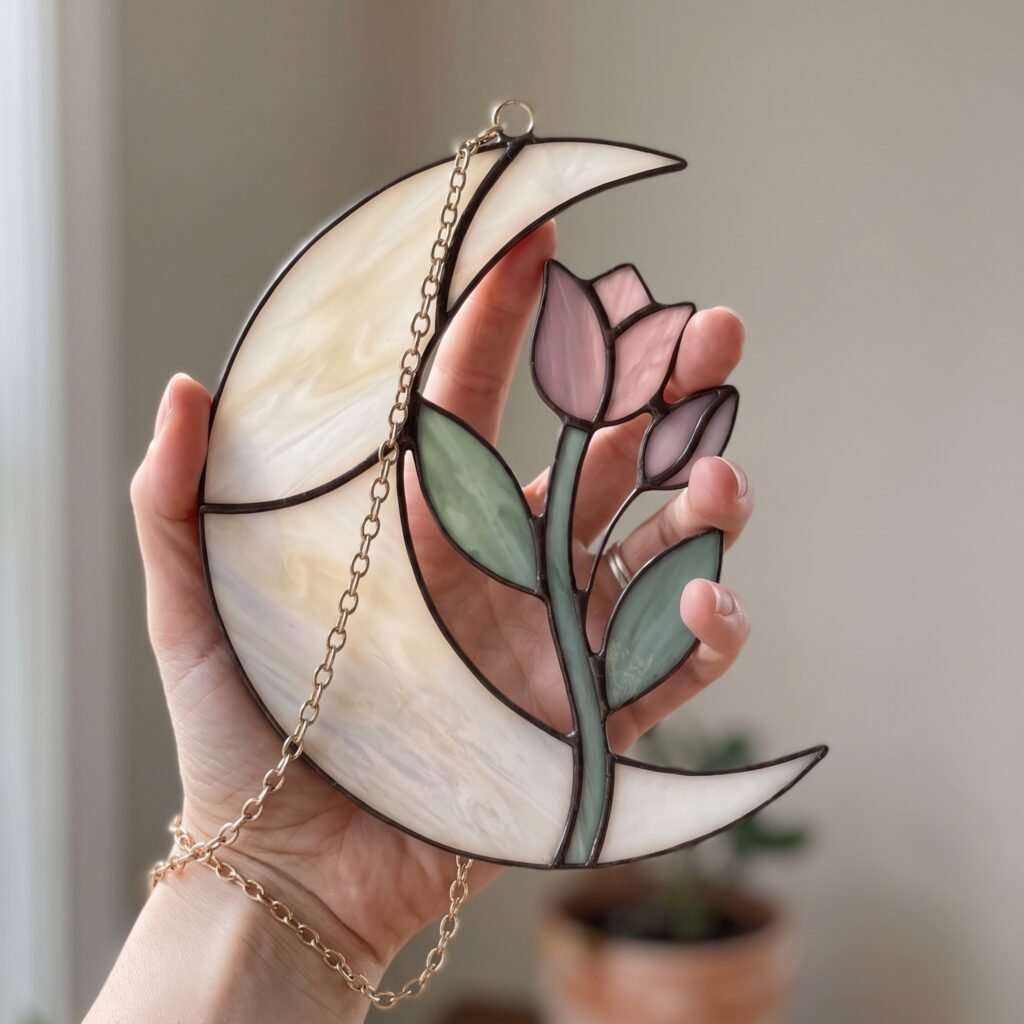
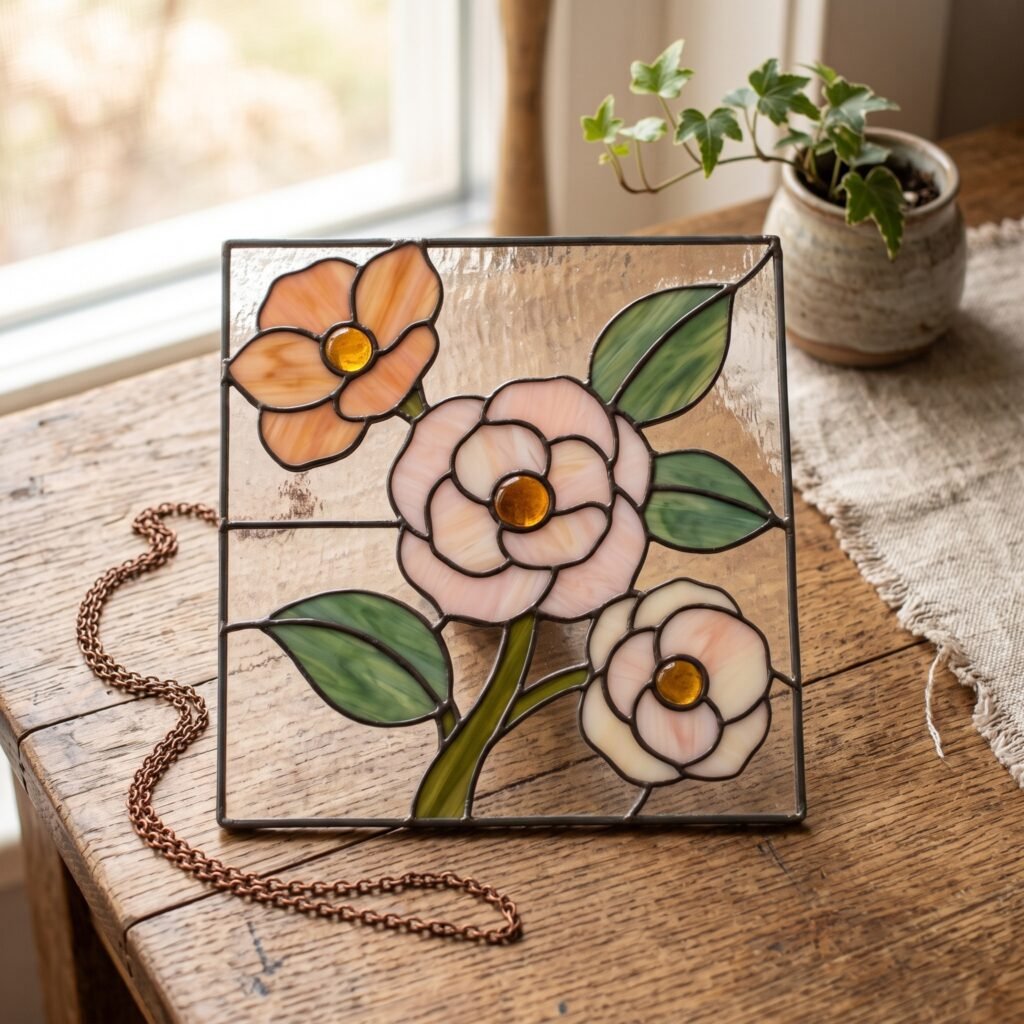
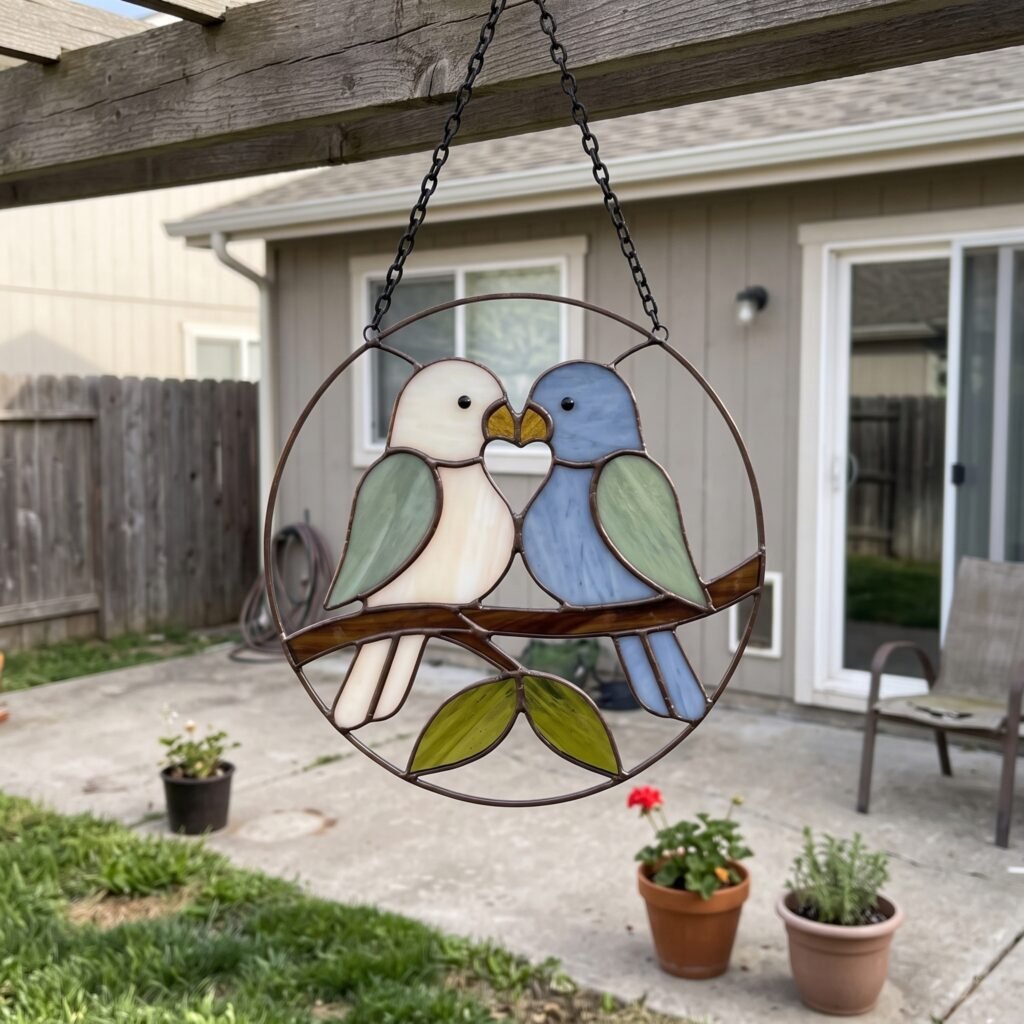
Browse the full library on the shop page if you want more themes to choose from, including celestial, floral, and landscape designs.
Caring for a Painted Piece
Once it’s fully cured, wipe painted glass with a soft, damp cloth — skip the dishwasher and skip soaking unless your paint is a heat-set enamel specifically labeled dishwasher safe. If you’re hanging an air-dry piece in a window, know that it’s a decorative finish, not a permanent one: expect it to hold its color well for a few years indoors, less if it gets direct sun or outdoor weather exposure. Heat-set enamel and true fired vitreous paint both last dramatically longer, because the paint is bonded to the glass rather than sitting on the surface of it.
Frequently Asked Questions
Is stained glass paint the same as regular acrylic paint?
No. Regular acrylic paint isn’t formulated to bond to glass and will flake or peel once it’s fully dry. Stained glass paint — air-dry, heat-set, or vitreous — uses a resin or glass-specific binder designed to adhere to a slick, non-porous surface.
Can I use stained glass paint on a glass I’ll drink from?
Only if it’s a heat-set enamel or vitreous paint that’s specifically labeled food-safe once cured, and even then, keep painted areas away from the rim. Air-dry glass paint is not food-safe and shouldn’t go anywhere near something you’ll eat or drink from.
Do I need a kiln to make faux stained glass?
No. Kilns are only for vitreous, fired paint. Air-dry and heat-set enamel paints — the two types nearly every home crafter and every tutorial online actually uses — need nothing more than a countertop and, for enamel, a regular oven.
How long does a painted stained glass window actually last?
An air-dry painted piece kept indoors typically holds its color well for a few years before it starts to look dull; direct sun and weather exposure shorten that considerably. Heat-set enamel and fired vitreous paint last much longer, because the paint is chemically or physically bonded to the glass instead of sitting on top of it.
Is this a good project for kids?
Air-dry paint and leading are the safest starting point — no kiln, no oven, and no solvent smell if you pick a water-based brand. Just supervise the leading step, since it’s squeezed from a fine tip and easy to overdo, and expect the first attempt to look looser than the tutorial photo. That’s normal, and it’s still going to look good in a sunny window.
The Bottom Line
Stained glass paint earns its reputation project by project. Pick the wrong type for what you’re making and it either falls apart or never leaves “craft store” territory behind. Air-dry paint is the right call for a first window or suncatcher, heat-set enamel is the right call for anything you’ll actually handle, and vitreous is worth it once you’re ready to invest in a kiln. Either way, the leading does more work than the color does — and a printable pattern will save you from the hardest part of the whole process, which is the drawing. If suncatchers are more your speed once the paint’s dry, our guide to stained glass suncatchers is a good next stop.