
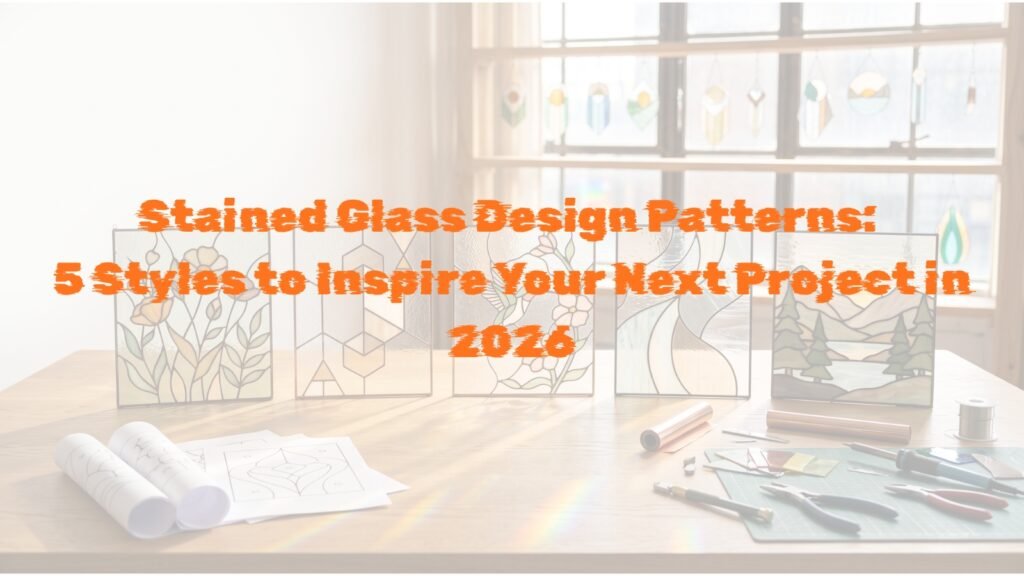
Stained glass is having a real moment in 2026, moving well beyond church windows into lamps, room dividers, and wall art (House Digest, 2026). If you’re picking your next pattern, the hardest part usually isn’t the cutting or soldering — it’s deciding which design actually fits your skill level and the space you want to fill.
This guide breaks stained glass design patterns into five practical styles — celestial, birds and animals, florals, landscapes, and seasonal/gift pieces — with a real pattern example from each so you can see the difference between a beginner-friendly layout and a more advanced one before you commit to a design.
Key Takeaways
- Stained glass design is trending beyond windows in 2026, showing up in lighting, room dividers, and standalone art pieces (House Digest; SCW Glass, 2026).
- The five most common stained glass pattern styles are celestial, birds/animals, florals, landscapes, and seasonal/gift designs — each with a different typical piece count and difficulty.
- Piece count, not subject matter, is the best predictor of difficulty: fewer than 15 pieces with gentle curves is a solid first-project range.
- Digital PDF patterns let you print a design at home and start tracing the same day, without waiting on a physical kit to ship.
Why Stained Glass Design Patterns Are Trending in 2026
The global arts and crafts market grew to an estimated $50.7 billion in 2026, up from $47.35 billion the year before (The Business Research Company, 2026), and stained glass is riding that wave as a “hard skill” craft that’s become far more approachable through pattern-based methods. Design publications point to a genuine resurgence: House Digest calls stained glass the old-school glass trend set to appear in “every room” in 2026, and glass fabricator SCW Glass lists it among the top stained glass trends for the year, citing its expanding use in lighting fixtures and decorative dividers rather than windows alone (SCW Glass, 2026).
Pinterest’s official 2026 trend report reinforces this from the design-culture side: stained glass appears as a visual element within the platform’s “Opera Aesthetic” trend, layered alongside draped fabric and velvet in more theatrical, maximalist interiors (Pinterest Predicts, 2026). In practice, that means pattern demand is spreading past traditional florals and religious imagery into bolder, more graphic styles — exactly the shift you’ll see across the five categories below.
How to Match a Pattern to Your Skill Level
Before picking a design because you like the subject, check its piece count and line complexity — that combination, not the theme, determines how hard a pattern actually is to cut and assemble.
- Beginner (under 15 pieces, mostly straight lines or gentle curves): sun catchers, single-flower motifs, simple geometric shapes.
- Intermediate (15-40 pieces, some tight curves): multi-element scenes, animal portraits, layered florals.
- Advanced (40+ pieces, fine detail, inside corners): full landscapes, dense floral bundles, multi-panel designs.
Every pattern featured below notes which end of that range it falls toward, so you can match ambition to available time realistically.
Celestial Designs: Moons, Stars & Night-Sky Motifs
Celestial patterns pair naturally with sun catchers since light transmission is the entire point of a moon or star shape hung in a window. They also tend to sit on the simpler end of the difficulty range because crescents and star points are mostly smooth curves rather than tight, fiddly detail.
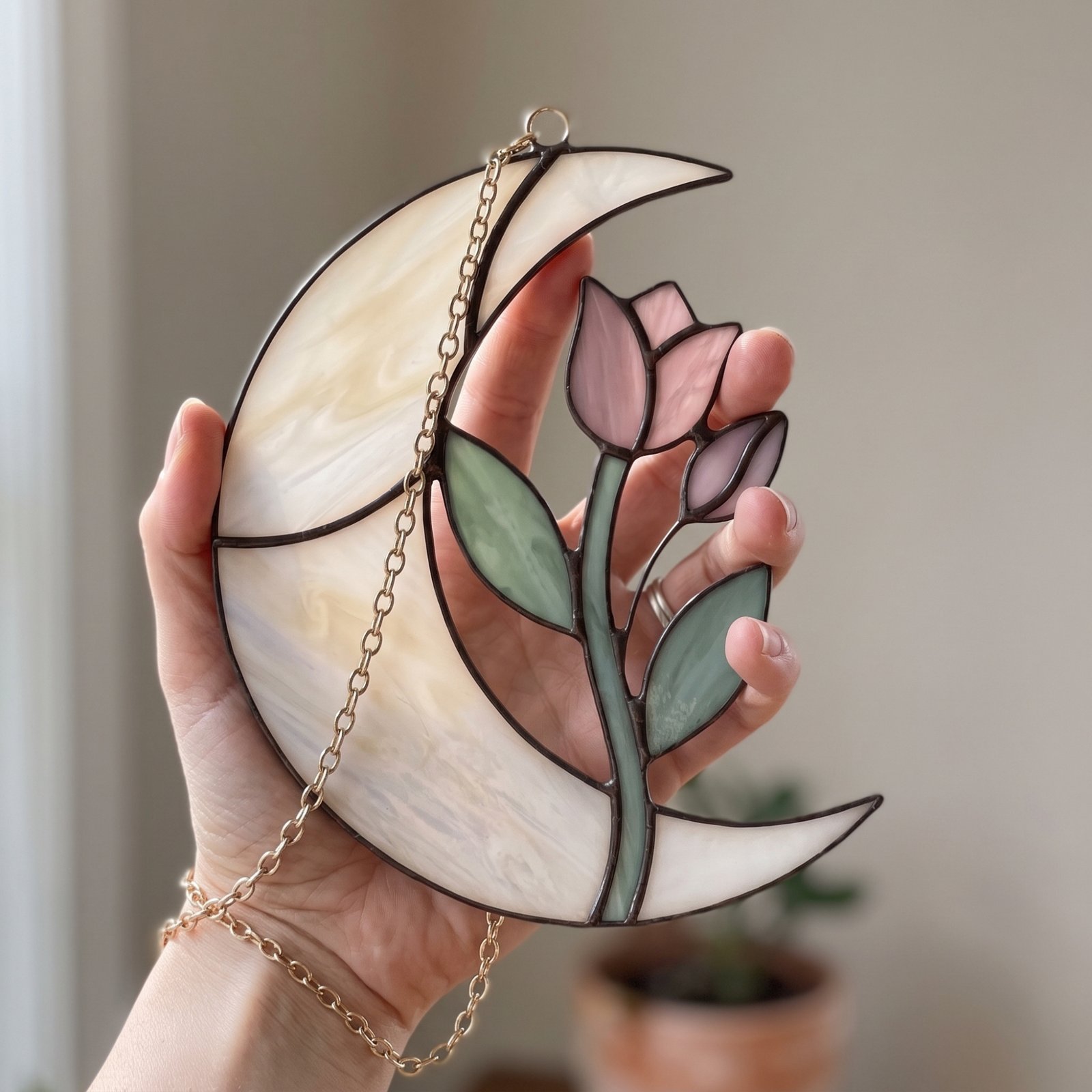
CELESTIAL DESIGNS
Moon Flower Stained Glass Pattern
Instant digital download (PDF) — a moon-and-floral hybrid that reads well as a sun catcher or small window panel.
Birds & Animals: Nature Portraits in Glass
Animal patterns test your grinding and foiling skills more than most other categories, since feathers, fur, and facial features create a lot of short, curved seams packed into a small area. They’re a good second-or-third project once you’re comfortable with basic cutting.
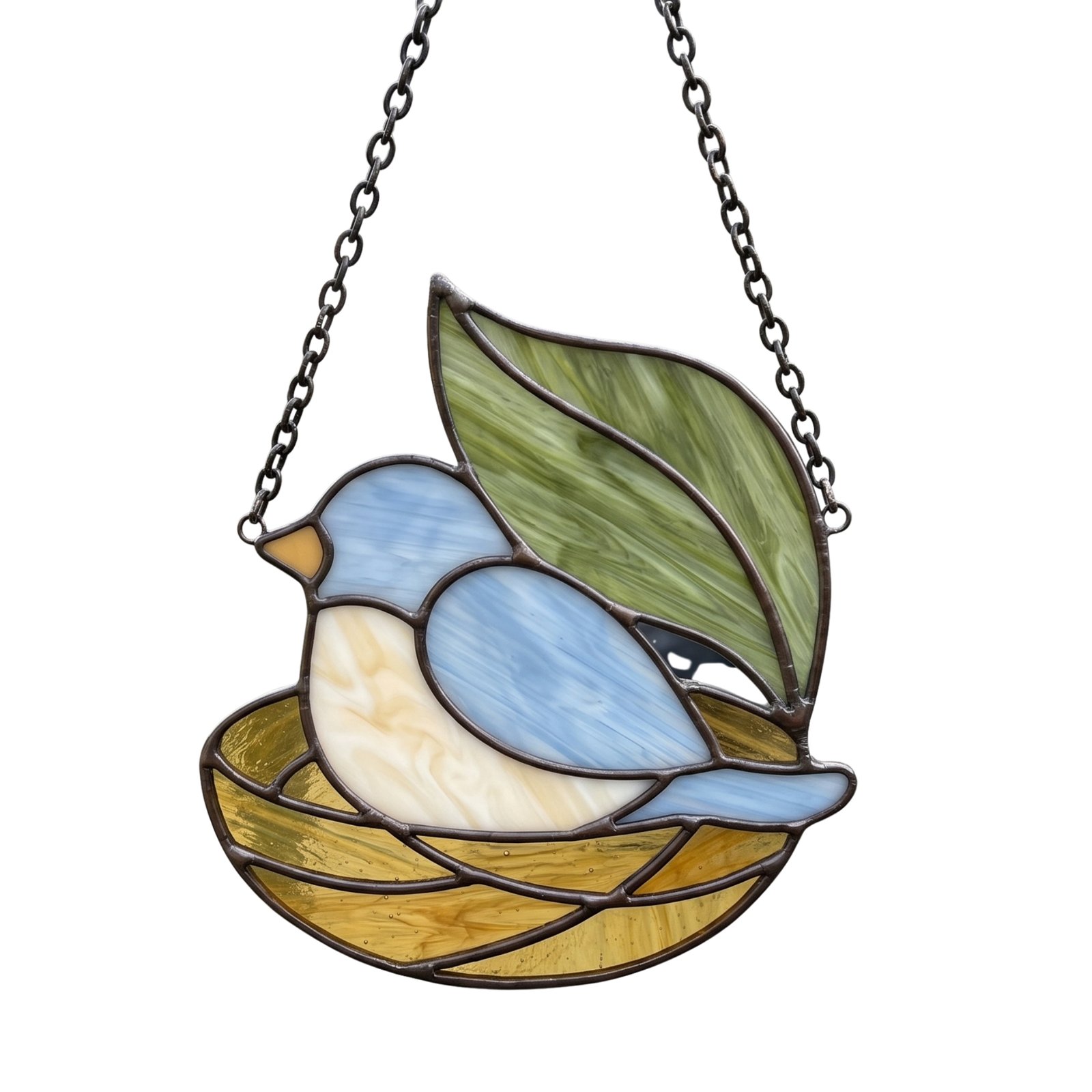
BIRDS & ANIMALS
Bird in Nest Stained Glass Pattern
Instant digital download (PDF) — a mid-complexity songbird scene that builds real foiling practice on curved edges.
Florals & Nature: Botanical Stained Glass Patterns
Florals are the most requested stained glass subject for a reason: petals give you natural, forgiving curves, and color layering (light center, deeper edge tones) makes even a modest piece count look intentional and finished.
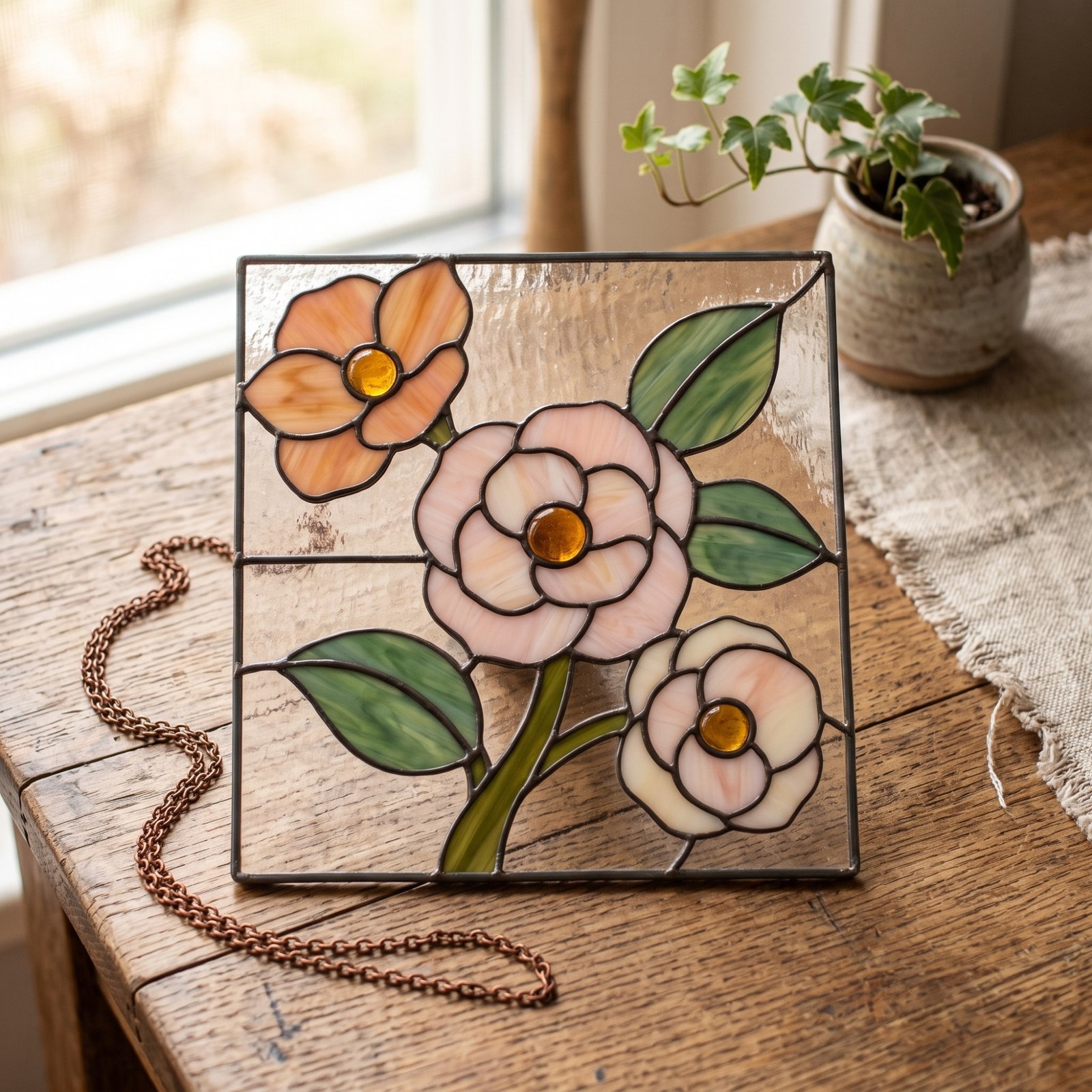
FLORALS & NATURE
Camellia Stained Glass Pattern
Instant digital download (PDF) — rounded, overlapping petals that reward gradient color choices over a single glass sheet.
Landscapes & Scenes: Scenic Stained Glass Patterns
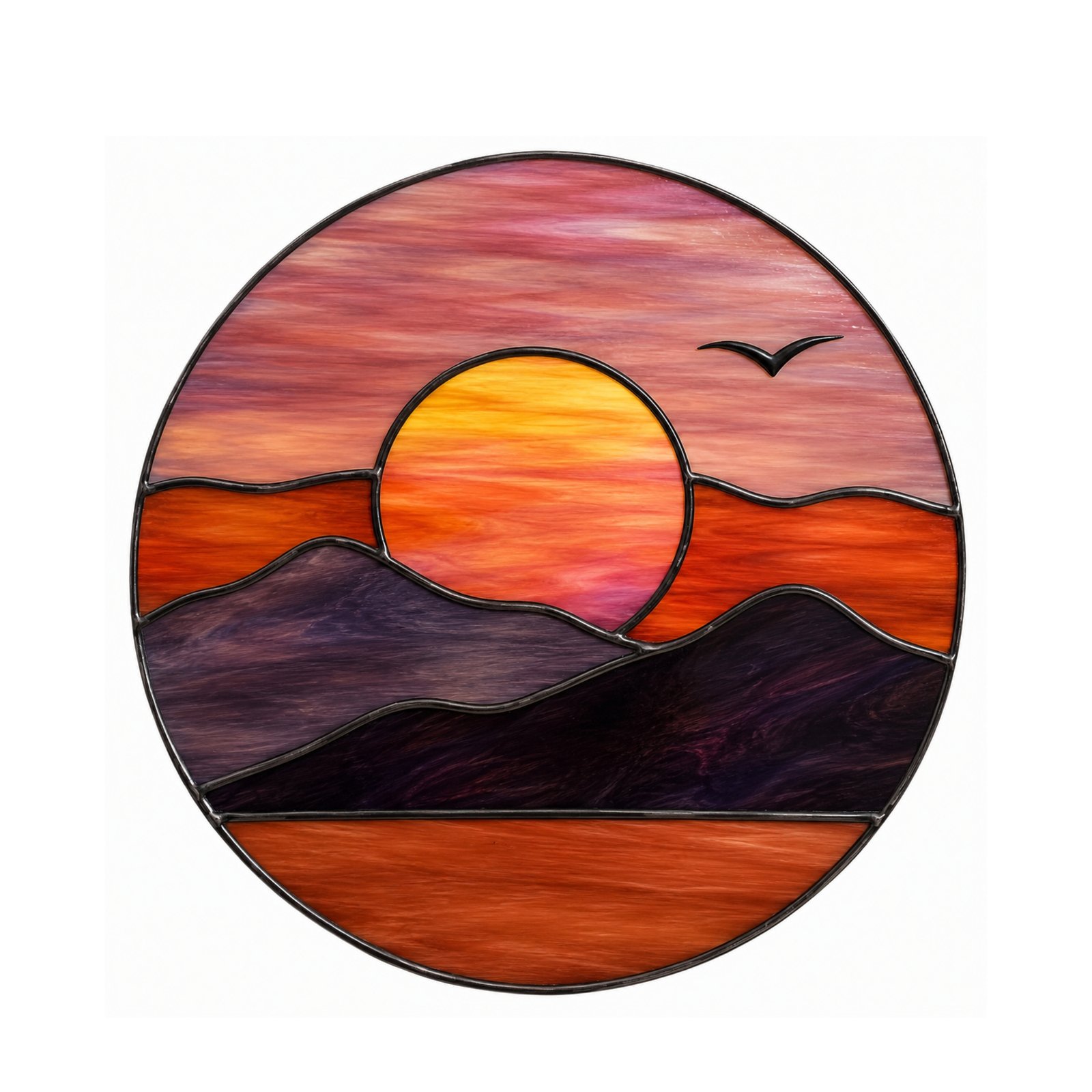
Landscape patterns are where piece count climbs fastest, since a single scene usually layers sky, horizon, and foreground into separate color bands. They’re best attempted once you’ve finished at least one smaller panel, but they reward the extra pieces with a strong sense of depth when hung against light.
LANDSCAPES & SCENES
Sunset Mountain Stained Glass Pattern
Instant digital download (PDF) — layered ridgelines against a graduated sky, a good intermediate-to-advanced landscape build.
Seasonal & Gift Patterns: For Holidays and Special Occasions
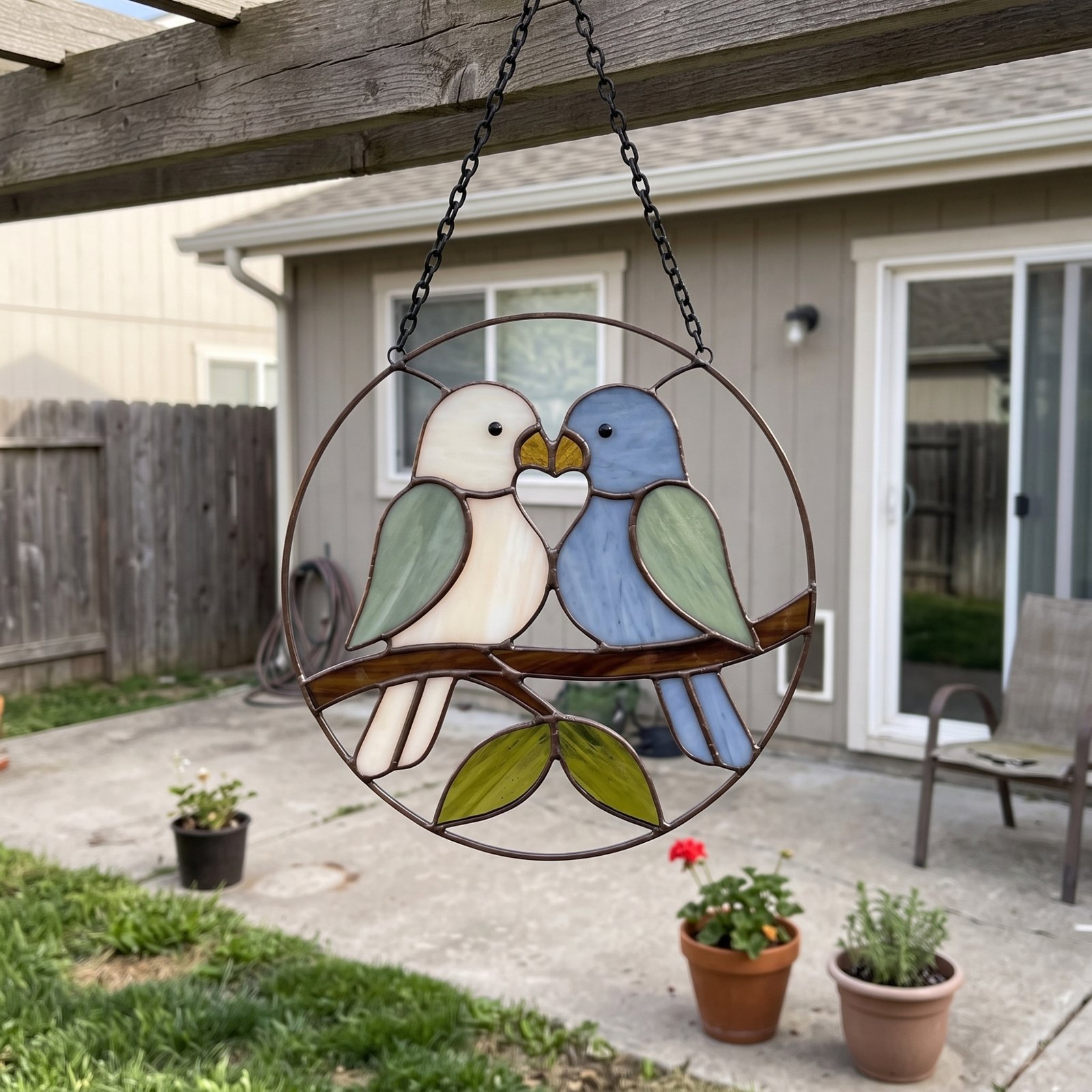
Seasonal and gift patterns are usually sized for a quick turnaround — most fall in the beginner-to-intermediate range because they’re built to be finished and gifted before a specific date, not displayed as a centerpiece project.
SEASONAL & GIFT
Love Birds Stained Glass Pattern
Instant digital download (PDF) — a compact two-bird motif sized for a weekend build and gifting.
Want the full lineup? Every pattern above is one of 15+ instant-download designs across these five styles.
From Pattern to Finished Panel: 3 Tips Before You Cut
Picking the right design solves half the problem; the other half is translating a flat pattern into cut glass without wasting a sheet on an avoidable mistake.
- Count pieces before you commit, not after you’ve bought glass. A pattern that looks simple in a thumbnail can hide 30+ pieces once you look at the full-size print — know the count before you cut your first score line.
- Test the design’s proportions against your actual glass sheet sizes. Scaling a pattern up or down changes how forgiving small mistakes are; larger pieces have more margin for a slightly off score.
- Hold your color choices up to real daylight before finalizing. Glass color and texture read differently under studio light than in the window where the finished piece will actually hang.
If you haven’t cut a panel yet, our full walkthrough covers the copper foil method end-to-end: How to Make Stained Glass: A 2026 Step-by-Step Guide.
Frequently Asked Questions
What’s the easiest stained glass pattern style for a first project?
Celestial and simple floral patterns tend to be the easiest starting point because moons, stars, and single flowers are mostly smooth curves with fewer than 15 pieces. Save bird, animal, and landscape patterns for after your first one or two panels.
Do I need special software to use a digital stained glass pattern?
No. A digital PDF pattern is designed to be printed at home at full size on standard printer paper (often across multiple pages you tape together), then traced directly onto your glass — no design software required.
Can I resize a stained glass pattern to fit a different project?
Yes, most patterns can be scaled up or down with a standard printer’s “fit to page” or “scale” setting, or resized digitally before printing. Keep in mind that scaling down shrinks every piece proportionally, which makes fine detail harder to cut cleanly.
How do I know how much glass to buy for a pattern?
Check the pattern’s overall finished dimensions and color count, then buy enough of each color sheet to cover its largest single piece plus a margin for mistakes and test cuts — most sellers list finished size alongside the pattern for exactly this reason.
Conclusion
Celestial, birds and animals, florals, landscapes, and seasonal designs each bring a different skill demand and finished look, but piece count and curve complexity — not subject matter — are what actually determine how hard a pattern is to execute. Start with a celestial or simple floral design if you’re new, and work up to landscapes and detailed animal portraits as your cutting and foiling skills improve.
Browse the full collection of instant-download patterns across all five styles in our Shop, or start with our step-by-step tutorial if you haven’t cut your first panel yet.
3 Responses