
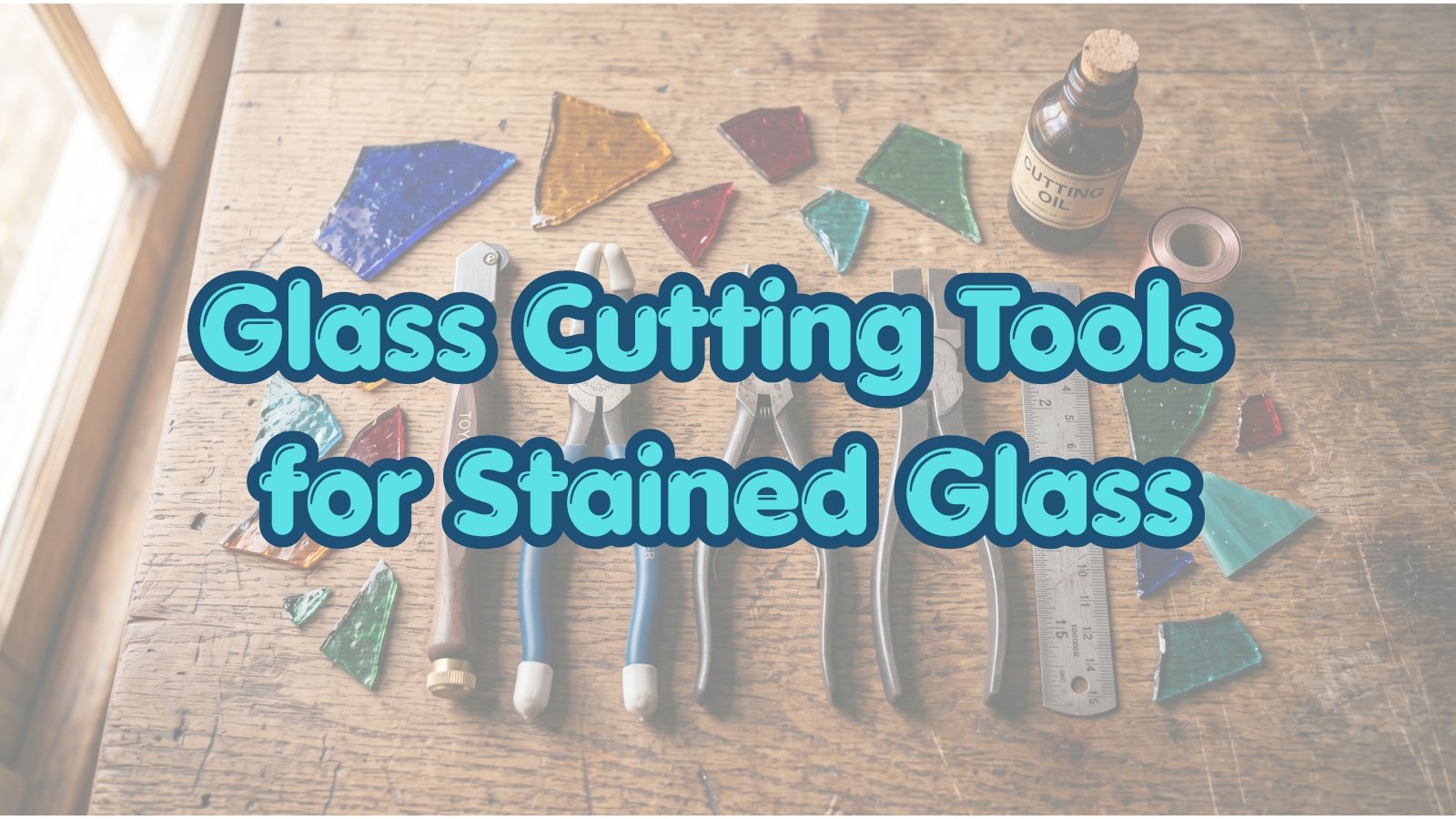
Roughly 20,000 workplace eye injuries happen in the US every year, costing an estimated $300 million in treatment and lost productivity, and craft and trade workers account for more than 40% of studied cases (American Academy of Ophthalmology, 2024). Stained glass work sits squarely in that risk category: every panel starts with a scored, deliberately-fractured piece of glass, and the tools you choose determine both how clean your cuts come out and how safely you get there.
This guide walks through the core glass cutting toolkit for stained glass — cutters, running pliers, grinders, and the safety gear standards worth knowing — so you can build a kit that matches your skill level and budget without over-buying or under-protecting yourself. We’ll also cover the most common tool-selection mistakes that slow beginners down.
Key Takeaways
- A functional starter toolkit is just four items: a glass cutter, running pliers, cutting oil, and safety glasses; a grinder is the first upgrade most makers add.
- Pistol-grip and pencil-style cutters both score glass the same way — the difference is grip comfort and control, not cutting power.
- Eye protection rated ANSI Z87+ (not just basic Z87) is built to pass a high-velocity impact test; cut-resistant gloves are separately rated on the ANSI/ISEA 105 A1-A9 scale.
- A basic beginner kit (cutter, pliers, oil, safety glasses) runs roughly $35-$60 at current retail pricing; adding a hand-pad or bench grinder pushes that toward $150-$400.
- Lacerations account for more than 60% of tool-related hand injuries in emergency-department data, which is why grinding every edge and gloving up isn’t optional once you’re past the cutting step.
The Essential Glass-Cutting Toolkit at a Glance
Before comparing individual tools, it helps to see the full list in one place. Every item below earns a dedicated section further down.
-
- Glass cutter (pistol-grip, pencil-style, or oil-fed) — scores the glass so it fractures along a controlled line.
-
- Cutting oil — lubricates the cutting wheel; many modern cutters are self-lubricating, but a top-up bottle is cheap insurance.
-
- Running and grozing pliers — snap the scored glass cleanly and nibble away small stubborn edges.
-
- Glass grinder (bench, hand-pad, or cordless) — smooths and fine-tunes cut edges before foiling.
-
- Safety glasses (ANSI Z87/Z87+ rated) — non-negotiable at the cutting table.
-
- Cut-resistant gloves (ANSI/ISEA 105 rated) — protect against the nicks that happen during grinding and handling.
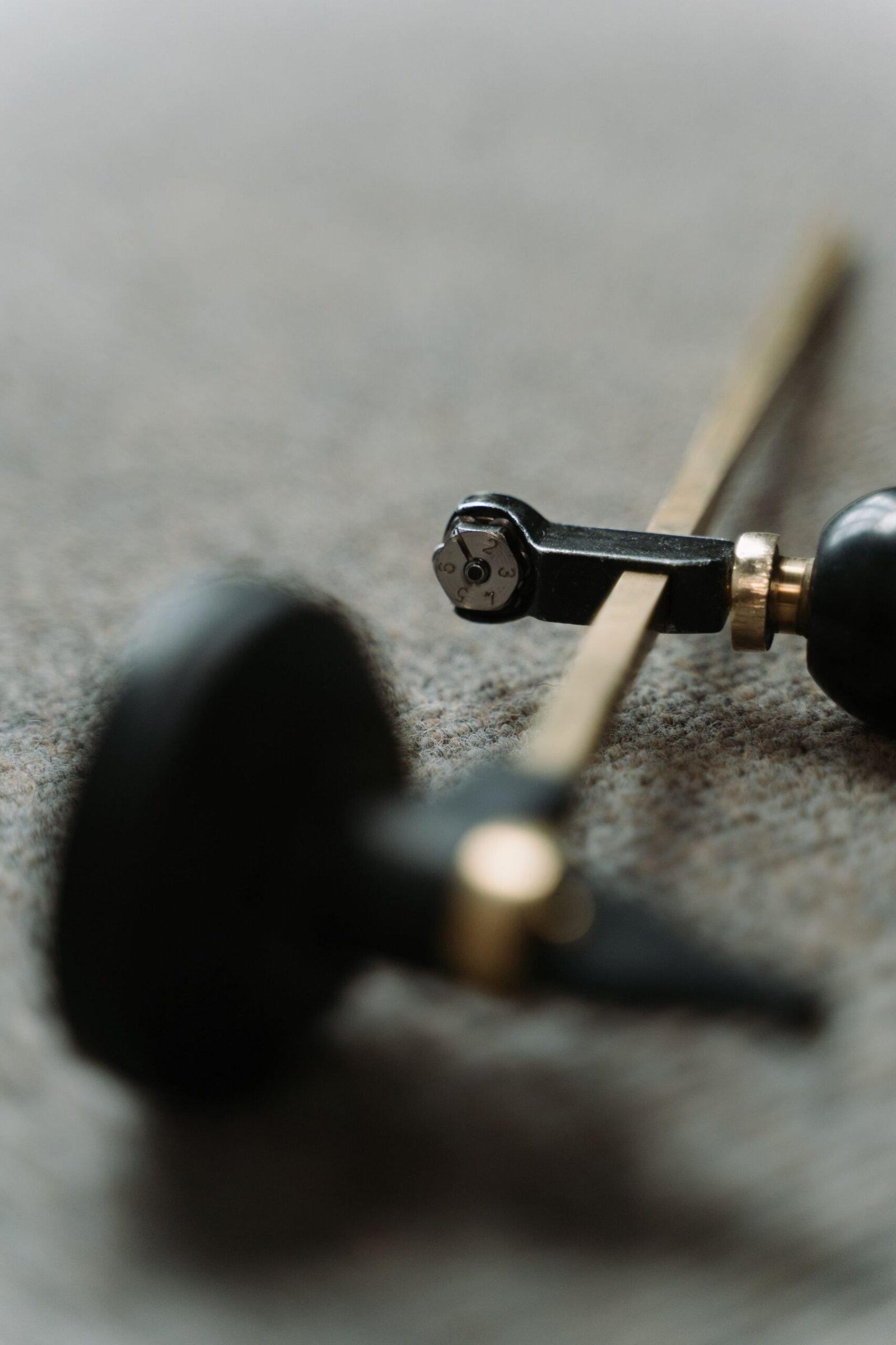
Glass Cutters: Pistol-Grip, Pencil-Style, and Oil-Fed Explained
Every glass cutter does the same basic job — a small hardened wheel presses a controlled fracture line into the glass surface — but the handle style changes how much control you have over that line.
Pencil-style cutters are the traditional, low-cost option: a slim metal shaft with a cutting wheel at the tip, held like a pen. They’re precise for detail work but can fatigue your hand on longer cutting sessions.
Pistol-grip cutters wrap the same wheel mechanism in an ergonomic handle you grip like a tool rather than a pen. Most beginner-class instructors point new cutters toward this style first, since the grip absorbs more of the pressure and makes it easier to hold a consistent 90-degree angle through a long score line.
Oil-fed cutters (either style) carry a small reservoir of cutting oil that feeds the wheel automatically as you score, which keeps the wheel lubricated without a separate oil bottle and tends to extend wheel life.
Wheel material matters more than handle style for cut quality: tungsten-carbide wheels are the standard, reliable choice, while diamond-tipped wheels cost more but hold an edge longer under heavy use.
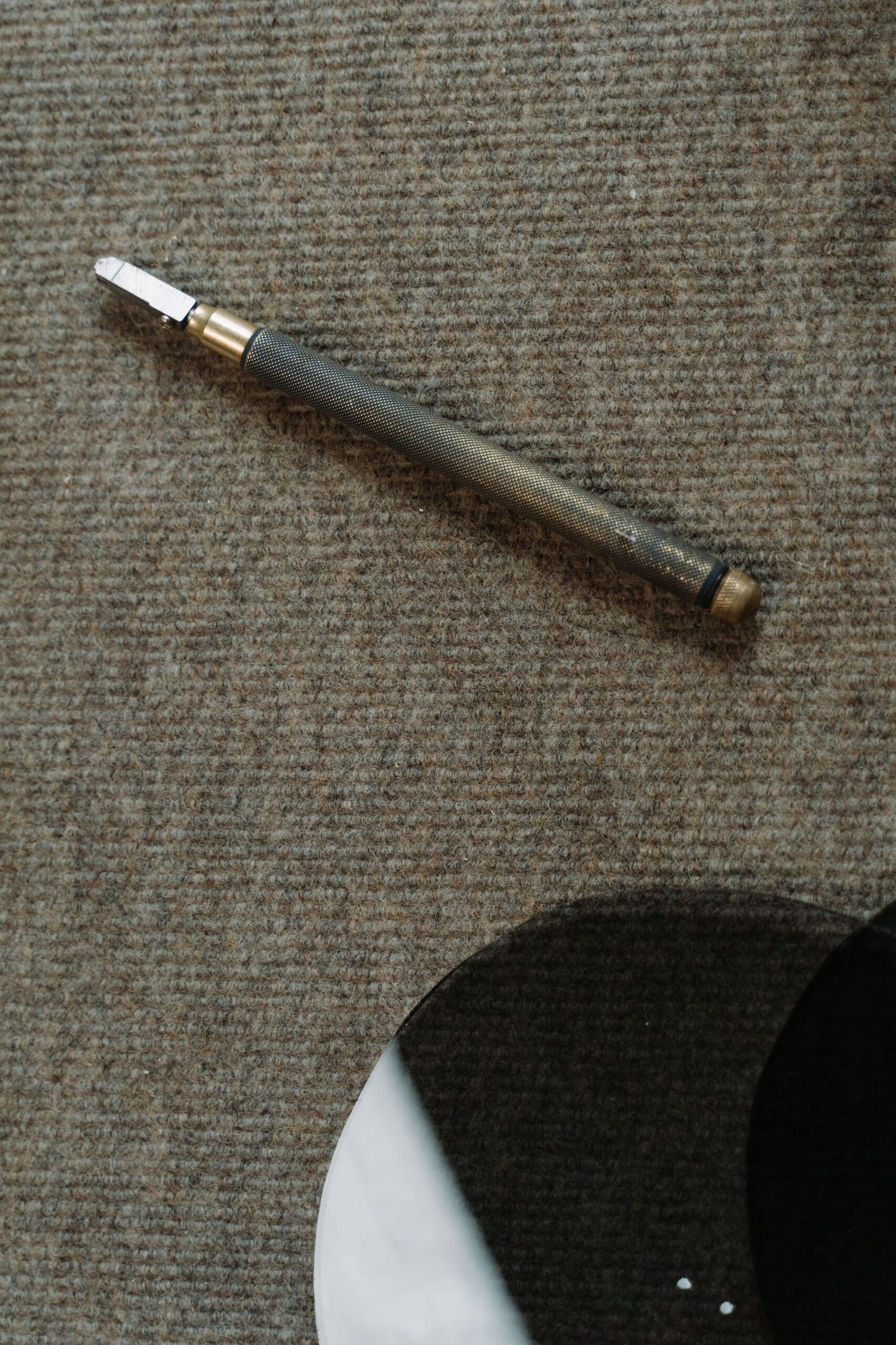
For the actual scoring-and-breaking technique once you’ve picked a cutter, see our full walkthrough of cutting, grinding, foiling, and soldering.
Running and Grozing Pliers: Why You Need Both
A cutter only scores the glass; pliers are what actually separate it along that line, and most kits benefit from two distinct types rather than one all-purpose pair.
Running pliers have a curved jaw designed to apply even pressure along a straight or gently curved score line, snapping the glass cleanly in one motion. Grozing pliers have a flatter, notched jaw built for nibbling away small chips along a rough or curved edge — the fine-tuning tool you reach for after the main break.
Budget matters here more than in almost any other category on this list: a basic pair of running pliers typically runs $13-$25, while premium Swiss-made pliers (Silberschnitt is the commonly cited benchmark brand) can run closer to $140. For a first kit, a mid-range pair is plenty; the premium versions earn their price on repeated tight-curve work rather than straight cuts.
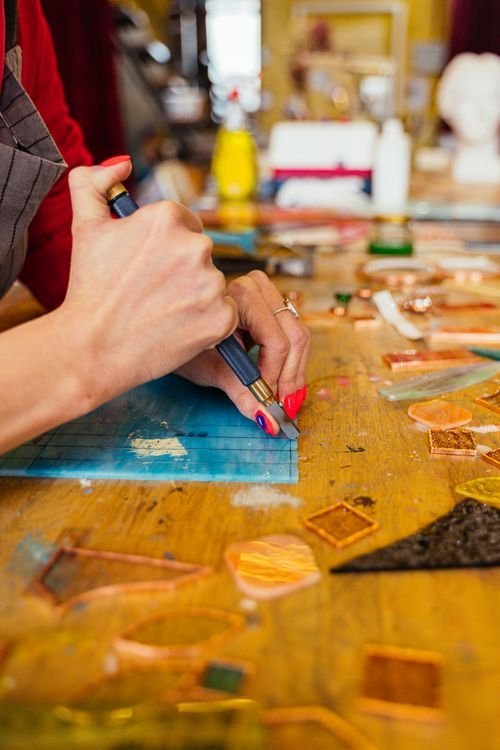
Glass Grinders: Bench, Hand-Pad, and Cordless Options
A grinder isn’t strictly required for your first panel — fine-grit hand pads can smooth a small number of edges manually — but almost every maker adds one once piece counts climb past a dozen or so per project.
Bench grinders are stationary, water-cooled units with a diamond bit that you guide the glass edge against; they’re the standard studio tool and the fastest way to true up an edge. Hand-pad grinding (fine sandpaper blocks or diamond hand pads) works fine for occasional touch-ups but is slow for a full panel’s worth of edges. A newer cordless, battery-powered grinder category has also appeared on the market — smaller and more portable than a bench unit, aimed at hobbyists without dedicated studio space, though most current models trade some power and run time for that portability.
Whichever type you choose, grinding does two jobs at once: it removes the sharp micro-chips left by cutting, and it fine-tunes each piece’s final size against its neighbors before foiling.
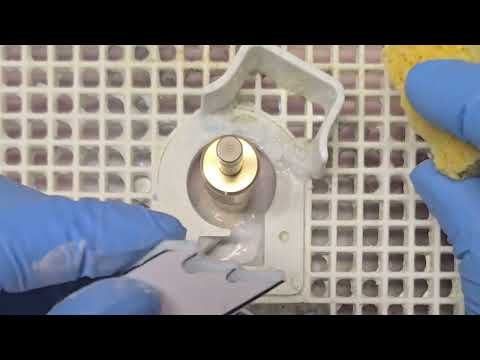
Safety Gear You Shouldn’t Skip: Eyewear and Cut-Resistant Gloves
Scoring and breaking glass produces sharp shards and fine dust, and grinding adds wet slurry into the mix — none of that is optional to protect against, and the standards behind “safety glasses” and “cut-resistant gloves” are more specific than most beginners realize.
Eye protection is rated under ANSI/ISEA Z87.1, the standard OSHA references directly in 29 CFR 1910.133. Basic “Z87” markings mean the lens passed a drop-ball impact test; “Z87+” marks a higher-impact rating that requires passing separate 150 fps high-mass and 350 fps high-velocity projectile tests. For grinding specifically (where small fragments can travel with real force), Z87+ is the safer baseline, not basic Z87.

Cut-resistant gloves are rated on the ANSI/ISEA 105 scale from A1 (lowest) to A9 (highest), tested with a bladed tomodynamometer that measures how much force it takes to cut through the material. The 2024 revision of the standard added a pentagon-shaped label showing cut, puncture, and abrasion ratings together, so newer glove packaging is easier to compare at a glance than older labels. You don’t need top-tier A9 gloves for stained glass grinding and handling, but a mid-range rating is worth the few extra dollars over an unrated cotton glove.
Tool-Related Hand Injuries by Type. horizontal bar data: Lacerations 62; All other injury types (combined) 38.Source: Singh et al., “Comprehensive analysis of power tool injuries,” Injury (PubMed) Feb 2024.
Tool-Related Hand Injuries by Type
Share of cases, 2013-2022 (percent) Lacerations
62
All other injurytypes (combined)
38
Source: Singh et al., “Comprehensive analysis of power tool injuries,” Injury (PubMed) (Feb 2024)
Lacerations make up the largest share of tool-related hand injuries by a wide margin, based on a decade of emergency-department data — which is the practical case for gloving up during grinding and cleanup, even on a small home project.
Beyond Cutting: The Tool You’ll Need Next
Once your pieces are cut, ground, and foiled, the next tool on your bench is a soldering iron — it’s what turns individually wrapped pieces into a finished, structurally sound panel. If you don’t already own one, this is the temperature-controlled iron we recommend for stained glass work: Stained Glass Soldering Iron.
Disclosure: that’s an affiliate link. If you buy through it, we may earn a small commission at no extra cost to you. See our full affiliate and third-party disclosure for details.
For the full foiling-and-soldering process once your pieces are cut and ground, see our complete copper foil method walkthrough.
How to Choose Tools by Skill Level and Budget
Piece count and project frequency, not ambition, should drive how much you spend on your first kit.
Beginner ($35-$60): A basic pencil or pistol-grip cutter, one pair of running pliers, cutting oil, and safety glasses. This covers a first sun catcher or simple panel under 15 pieces, using hand pads instead of a grinder.
Intermediate ($150-$250): Add a hand-pad or entry-level bench grinder and a second pair of grozing pliers. This is the point where most makers stop hand-grinding and start producing consistently tight seams.
Advanced ($300+): A full bench grinder, a premium cutter (oil-fed, carbide or diamond wheel), and Swiss-grade pliers. This tier is about speed and edge consistency across larger, higher-piece-count projects, not a requirement for good results.
These figures are aggregated from current listings at major craft and hardware retailers rather than a single audited price study, so treat them as planning ranges, not fixed quotes.
| Skill Level | Typical Cost | What’s Included |
|---|---|---|
| Beginner | $35-$60 | Cutter, running pliers, cutting oil, safety glasses |
| Intermediate | $150-$250 | Beginner kit + hand-pad or entry-level bench grinder, second pliers |
| Advanced | $300+ | Full bench grinder, premium oil-fed cutter, Swiss-grade pliers |
Estimated Starter Budget by Skill Level (USD). lollipop data: Beginner (cutter, pliers, oil) 50; Intermediate (+ hand grinder) 200; Advanced (+ bench grinder, premium cutter) 350.Source: Aggregated major-retailer listings – directional estimate, not an audited figure 2026.
Estimated Starter Budget by Skill Level (USD)
Beginner $35-60 – Intermediate $150-250 – Advanced $300+ Beginner(cutter, pliers,oil)
50
Intermediate (+hand grinder)
200
Advanced (+bench grinder,premium cutter)
350
Source: Aggregated major-retailer listings – directional estimate, not an audited figure (2026)

Common Mistakes When Choosing or Using Cutting Tools
1. Buying the most expensive cutter before your first project. A mid-range pistol-grip cutter is plenty for learning the scoring motion. Save premium oil-fed or diamond-wheel cutters for once you’ve felt the difference a cheaper wheel makes on curves.
2. Skipping safety glasses because “it’s just a small piece.” Small chips are exactly what basic Z87-rated lenses are built to stop, and grinding sends fragments faster and less predictably than hand-cutting does.
3. Treating cotton or generic work gloves as cut-resistant. Only ANSI/ISEA 105-rated gloves have a tested cut-resistance rating; standard fabric gloves offer grip, not blade protection, at the grinder.
4. Letting a cutting wheel go dull and cutting anyway. A dull wheel produces a rough, uneven score that’s more likely to fracture off-line. If a score stops making a clean, consistent sound as you pull it, replace the wheel before your next project.
5. Under-buying pliers to save money. A single generic pair of pliers can break straight lines fine but struggles on curves, leading to more wasted glass than the $10-15 saved is worth. Running and grozing pliers solve different problems.
Frequently Asked Questions
Do I need a grinder to start cutting stained glass?
No. Fine-grit hand pads can smooth edges on a small first project, and many beginners start there. A grinder becomes worth the cost once you’re cutting more than a handful of pieces per project, since hand-grinding a full panel’s worth of edges is slow.
What’s the difference between a Z87 and Z87+ safety rating?
Basic Z87 lenses pass a drop-ball impact test; Z87+ lenses additionally pass 150 fps high-mass and 350 fps high-velocity projectile tests, making them the better choice specifically for grinding, where fragments can travel with more force than during hand-cutting alone.
Is an expensive glass cutter actually worth it for a beginner?
Not right away. A mid-range pistol-grip or pencil-style cutter with a tungsten-carbide wheel is enough to learn proper scoring technique. Premium oil-fed or diamond-wheel cutters pay off once you’re cutting frequently enough to notice wheel longevity and control differences on tight curves.
What glove rating do I need for stained glass grinding?
There’s no single mandated rating for hobby stained glass work, but a mid-range ANSI/ISEA 105 cut-resistance rating (rather than an unrated fabric glove) is a reasonable minimum for handling freshly cut and ground edges.
Are cordless glass grinders any good?
Cordless grinders are a newer, more portable option aimed at hobbyists without dedicated studio space. They generally trade some power and continuous run time for portability, so they suit occasional small projects better than high-volume production work.
Conclusion
A working stained glass toolkit starts small: a cutter, running pliers, cutting oil, and rated safety glasses cover your first project for well under $100. Add a grinder once piece counts climb, choose eye and hand protection by their actual ANSI ratings rather than assumption, and upgrade to premium cutters and pliers only once you’ve felt where a cheaper tool holds you back.
Ready to put your new toolkit to work? Follow our complete copper foil method walkthrough from your first score to a finished, hangable panel, or browse five pattern styles by difficulty to pick a first project that matches your new tools.
8 Responses